The recent natural law debate launched by David Bentley Hart's First Things article continues. Thaddeus Kozinski entered the fray on Hart's side with an article in Ethika Politika. Both Edward Feser and Brandon Watson responded. Then Hart responded to Feser's response of Hart's original article. Finally, just today, Feser posted a cleverly titled response to Hart's response, very likely to result in another response by Hart.
Meanwhile, on a related note, Brandon has continued posting his introductory series on natural law theory. So far, there's parts I, II, IIIa, and IIIb.

L'amor che muove il sole e l'altre stelle -- Dante
Showing posts with label Thomism. Show all posts
Showing posts with label Thomism. Show all posts
Wednesday, April 24, 2013

Monday, January 28, 2013
Feast Day of St. Thomas Aquinas
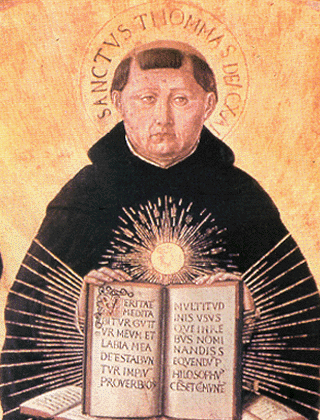
Today is the feast day of St.Thomas Aquinas, Doctor of the Church (Doctor Angelicus) and the most prominent medieval Scholastic philosopher and theologian.
While so many men were trying to base philosophy on theological foundations, a very simple and modest man was putting everything in its place. His name was Thomas Aquinas, and he was saying things so obviously true that, from his time down to our own day, very few people have been sufficiently self-forgetful to accept them. There is an ethical problem at the root of our philosophical difficulties; for men are most anxious to find truth, but very reluctant to accept it. We do not like to be cornered by rational evidence, and even when truth is there, in its impersonal and commanding objectivity, our greatest difficulty still remains; it is for me to bow to it in spite of the fact that it is not exclusively mine, for you to accept it though it cannot be exclusively yours. In short, finding out truth is not so hard; what is hard is not to run away from truth once we have found it. When it is not a "yes but," our "yes" is often enough a "yes, and..."; it applies much less to what we have just been told than to we are about to say. The greatest among philosophers are those who do not flinch in the presence of truth, but welcome it with the simple words: yes, Amen.
St. Thomas Aquinas was one of the latter, clear-sighted enough to know truth when he saw it, humble enough to bow to it in its presence. -- Etienne Gilson, The Unity of Philosophical Experience, 49
There are many interesting links available across the net:
Recommended reading on Aquinas:
- New Advent Catholic Encyclopedia page, Stanford Encyclopedia of Philosophy page, Internet Encyclopedia of Philosophy Aquinas Metaphysics page.
-G.K. Chesterton, St Thomas Aquinas (free online version)
-Etienne Gilson, The Christian Philosophy of Thomas Aquinas (Brandon: "Still the best introduction to Aquinas you can get your hands on.")
-Brian Davies, The Thought of Thomas Aquinas (Ed Feser: "Probably the best single volume in print for anyone looking for an overview of the whole range of Aquinas’s philosophical and theological thinking.")
-Edward Feser, Aquinas
For peeping Thomists like me who've just discovered the Angelic Doctor, a good place to start is:
Timothy Mcdermott, ed., Summa Theologiae: The Concise Translation
Ralph McInerny, ed, Thomas Aquinas: Selected Writings
For the full Summa, there are a few choices: hardback/paperback, Kindle, and online.
For Aquinas's entire works online.
Just for fun, a Thomas Aquinas music video:
- Father Robert Barron on St. Thomas Aquinas:
St. Thomas Aquinas, Ora Pro Nobis!
Monday, January 21, 2013
Dr. King and St. Thomas Aquinas on Just and Unjust Laws
A just law is a man made code that squares with the moral law or the law of God. An unjust law is a code that is out of harmony with the moral law. To put it in the terms of St. Thomas Aquinas: An unjust law is a human law that is not rooted in eternal law and natural law. Any law that uplifts human personality is just. Any law that degrades human personality is unjust. -- Martin Luther King Jr., Letter from a Birmingham Jail
***
Brandon has several interesting posts on Dr.King: here, here, here, and here.
***
Brandon has several interesting posts on Dr.King: here, here, here, and here.
Tuesday, November 6, 2012
St. Thomas on Friendship with Horses
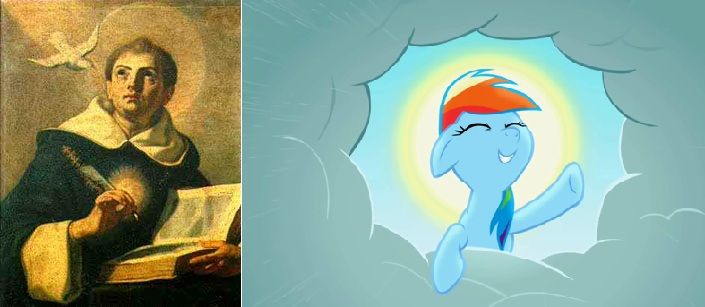 |
| St. Thomas and Rainbow Dash: Pony Friends Forever! |
I think Aquinas is right here that one cannot be friends with horses, since the usual equines we find lack the rationality humans have. As creatures of reason, we can will the good of one another, as we can know what is good for us through the intellect. If others reciprocate this good will, what we have is friendship, mutual love. Nevertheless, one can indeed have affection for a horse, as one loves other faithful animal companions, like dogs.
However, St. Thomas never knew about the anthropomorphic ponies of Equestria from the My Little Pony: Friendship is Magic show, for whom friendship, that is, willing the good of another, is sort of a big deal...
Sunday, October 28, 2012
Another Kind of Strong Female Character...

While reading Rebecca Bratten Weiss and Regina Doman's "Catholic Philosopher Chick Makes her Debut," I can't fail to notice that Catelyn constantly walks around Dominican University with her old, beaten single volume (!) copy of the Summa Theologiae. Unless this is some kind of fantasy story, I suspect she has an abridged version, since a modern-day complete Summa comprises 5 large volumes and 3000 pages!
Anyhow, I highly recommend the book (especially the $5 Kindle version), since you don't exactly get many chances to read the exciting exploits of female Thomist philosophers (or She-Thomists). Here's a review by First Things. I might post more as I make it further in, so stay tuned...
Thursday, October 25, 2012
Fluttershy and the Virtue of Gentleness
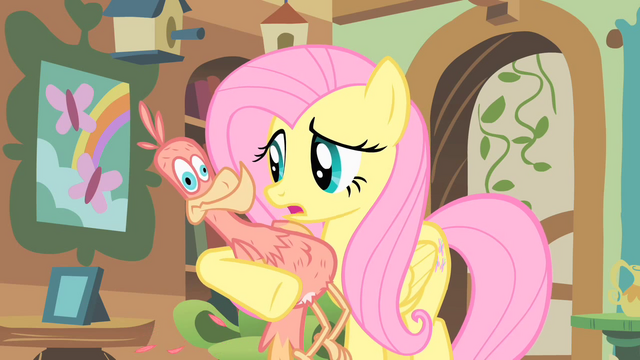 |
| Fluttershy the gentle pony |
I'm not sure how I overlooked this post on the virtue of gentleness by Brandon. But the descriptions from Aquinas (ST 2.2.157) of gentleness as "the moderation of the passion of anger in accordance with right reason" and from Hugh Blair that it "makes us unwilling to give pain to any of our brethren" dovetail nicely with my own posts (Part 1 and 2) on Fluttershy and the virtue of friendliness (amiability).
When it comes to not wanting to cause pain to anypony, Fluttershy is a very good exemplar (her character description on Hasbro.com mentions her as the "gentle" member of the Mane Six). Of course, her tendency towards agreeability can sometimes become a vice; witness how she normally responds to disagreement:
I have to admit, my natural temperament isn't too dissimilar, especially when I consider how philosophical debate can sometimes become "blood sport." I wouldn't want to become an angry, disagreeable Nastyshy either, especially to my friends:
Perhaps someday I will let go of my timidity and find the mean.
Tuesday, September 18, 2012
Aquinas: Music Video Super Star!
Are you just a beginning, peeping Thomist? Bought Ed Feser's book but haven't yet found the time to sit down and read it? Well, never fear, the singing trio of Bambi, Vicki, and Angelica will teach you the basics of St. Thomas Aquinas's thought (HT: Angelicum Newsletter):
Wednesday, August 29, 2012
Applejack and the Virtue of Truthfulness: Part 2 (of 3)
Liarjack and Pinkie Promises
We've seen examples of Applejack's honesty in season one, and, now, in season two, AJ begins to show her darker side. While in "The Return of Harmony”, she becomes a habitual liar against her will, in "The Last Roundup" she voluntarily makes a promise that she might never have intended to keep.
In "Return of Harmony," some infighting between the "Cutie Mark Crusaders," Apple Bloom (AJ's little sister), Sweetie Belle (Rarity's little sister), and Scootaloo, unexpectedly brings along the return of Discord from a thousand-year imprisonment in a statuesque prison. As I've noted before, Discord's main motivation is spreading social chaos by creating enmity between the ponies. (But, hey, as Pinkie Pie says, at least all this chaos comes with chocolate milk rain!)
Discord uses his powers to corrupt each of the Main Six, in some sense turning their strengths (virtues) into their opposite weakness (vices). Thus, Rainbow Dash, the loyal one, is now disloyal to her friends, Fluttershy, the kind one, is now unkind, Rarity, the generous one, becomes covetous, Pinkie Pie, the playful one, adopts a boorish and joyless temperament, and Twilight, the friendly one, is suddenly unfriendly. In short, the harmony between the Main Six gives way to disharmony. But for our purposes we focus on Applejack, the honest one, who trades her honest disposition for inveterate lying.
Discord used his manipulation to fool AJ into hiding the truth because "sometimes a lie is easier to take." Almost immediately, the lies begin to spew forth from Liarjack's mouth. Twilight is surprised that honest Applejack would lie and initially is in disbelief. But TS's initial skepticism falls under the weight of AJ's increasingly frequent intentional false statements. However, once Twilight rediscovers the "magic of friendship" which holds the Mane Six (and Equestria) together, she manages to heal the rifts between each of her friends, and together they defeat Discord with the Elements of Harmony. AJ returns to her honest self and takes part in a celebration of the Mane Six's destruction of the Death Star, I mean, of the defeat of Discord.
The excuse of being under the influence of Discord is not available in "The Last Roundup." Applejack travels to Canterlot to compete in a rodeo competition and to help raise money to fix Ponyville City Hall (Derpy's doing). When Applejack doesn't return and sends back a cryptic letter about "not coming back to Ponyville," the Mane Six get suspicious and board the Friendship Express train to Canterlot, promising the Apple family to find out the real reason for AJ's absence.
At the Canterlot rodeo, the pony friends find no sign of Applejack, so they move on to the frontier town of Dodge Junction all the way in the outer edges of Equestria. Finally, at the local outhouse the Mane Six stumble onto AJ, who appears to be working as a hired hoof for one of the local ranch owners. Applejack is reluctant to answer her friends' queries over why she didn't return to Ponyville after the rodeo. She wanted a "change of scenery" and took a job harvesting cherries, "end of story." The Mane Six rightfully see that AJ is withholding crucial information and make plans to "get her to spill the beans," as RD puts it.
The Mane Six's first attempt to get Applejack to tell the truth meets with failure in a sea of red and yellow cherries. A more ambitious plan unfolds, as Rarity says, "desperate times do call for desperate measures." The Mane Six bring in their truth serum secret weapon: Pinkie Pie! Pinkamena summons all her powers of buffoonery and nonsense to annoy AJ into confessing...until AJ finally cracks and promises to tell her friends the truth at breakfast the next day.
Instead of keeping her "Pinkie Promise," Applejack gets out of dodge, literally! The Mane six follow her in pursuit. Once they close in on AJ, Pinkie Pie hops on board the stagecoach and confronts her over the broken promise. AJ seems to say that she didn't break the promise since she never meant to keep it in the first place! "I just can't tell you the truth!" AJ responds. Saddened by her friend's dishonesty, Pinkie Pie leaps off the stagecoach...
Just when Applejack thinks she escaped, Rainbow Dash swoops in out of the sky and tackles AJ to the ground. AJ drops her saddlebag, revealing a host of medals she won at the rodeo competition. Apparently AJ didn't do as well as she expected (failing to place first in any contest) and didn't earn any prize money. As the town of Ponyville and AJ's friends had high hopes, she's too embarrassed to admit her failure, thus she stayed in Dodge Junction to work until she could raise money for the Ponyville City Hall repairs.
But Twilight, Fluttershy, and Rainbow Dash make it clear that they don't mind if Applejack does poorly in rodeos, they're friends regardless. They just want AJ to come back home. Applejack agrees to put aside her pride and returns to Ponyville... (Meanwhile, Rarity and Pinkie Pie get left behind.)
We've seen examples of Applejack's honesty in season one, and, now, in season two, AJ begins to show her darker side. While in "The Return of Harmony”, she becomes a habitual liar against her will, in "The Last Roundup" she voluntarily makes a promise that she might never have intended to keep.
In "Return of Harmony," some infighting between the "Cutie Mark Crusaders," Apple Bloom (AJ's little sister), Sweetie Belle (Rarity's little sister), and Scootaloo, unexpectedly brings along the return of Discord from a thousand-year imprisonment in a statuesque prison. As I've noted before, Discord's main motivation is spreading social chaos by creating enmity between the ponies. (But, hey, as Pinkie Pie says, at least all this chaos comes with chocolate milk rain!)
 |
| Realists and Nominalists disputing the existence of universals (oh, and of friendship) |
 |
| Liarjack |
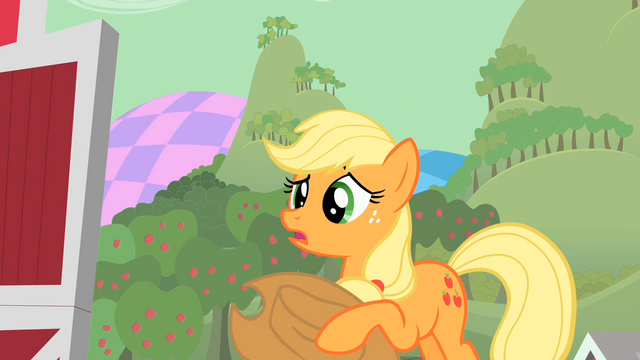 |
| Honest Applejack returns |
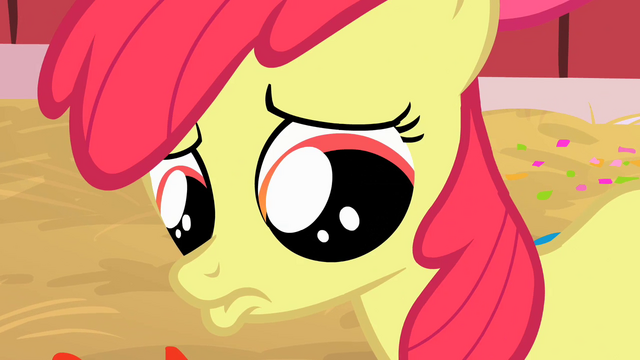 |
| Apple Bloom's epic sad face |
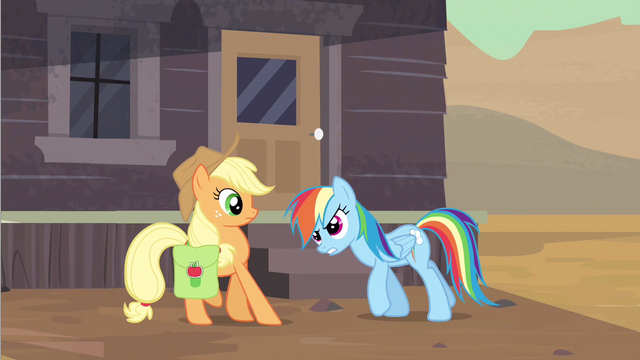 |
| AJ, I don't think you're being honest with us... |
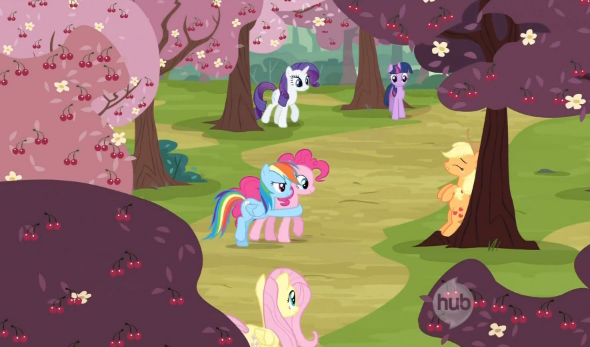 |
| Nopony can withstand Pinkie torture! |
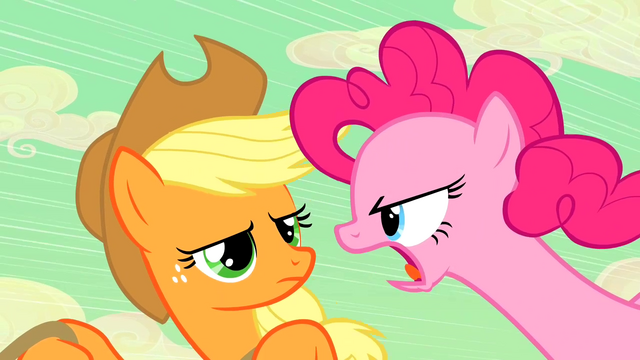 |
| You Pinkie Promised! |
But Twilight, Fluttershy, and Rainbow Dash make it clear that they don't mind if Applejack does poorly in rodeos, they're friends regardless. They just want AJ to come back home. Applejack agrees to put aside her pride and returns to Ponyville... (Meanwhile, Rarity and Pinkie Pie get left behind.)
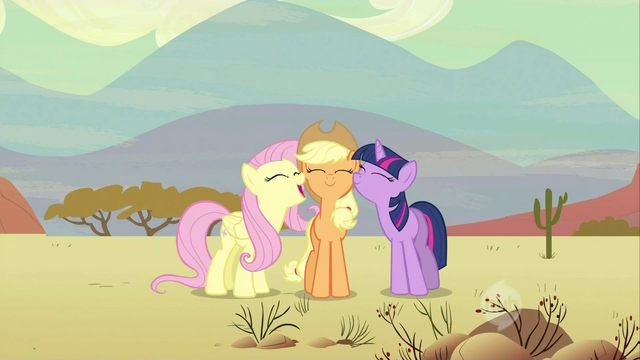 |
| Darn it, now you got me acting all sappy! |
Tuesday, August 28, 2012
Applejack and the Virtue of Truthfulness: Part 1 (of 3)
[As today is the feast of St. Augustine, whose definition of lying as "speaking falsely with the intent to deceive" I incline towards, I think it's fitting I begin my series on the virtue of honesty and the vice of lying.]
Character Overview
Applejack in My Little Pony: Friendship is Magic is a country pony with a southern accent and like all the members of the Apple family (her brother Big Mac, her little sister Apple Bloom, and Granny Smith) AJ’s special talent is apple harvesting. Unlike her lazy friend Rainbow Dash, AJ is adamant about hard work (sometimes too much, as in her attempt to single-hoovfully buck all the apples in Sweet Apple Acres). AJ’s stubborn pride sometimes gets her into conflict with the other Mane Six (she won’t accept busybody Twilight’s help, she can’t get along with the prissy Rarity, she is extremely competitive with the athletic RD).
Applejack also embodies the Element of Honesty. As the Hasbro.com description tells us, “Applejack would never stoop to tell a lie and this makes her a beacon for those seeking advice.”
There a few episodes in the series in which Applejack's honesty comes into play and in these series of posts I'll focus on "Friendship is Magic: Part 2," "Party of One," The Return of Harmony: Part 2," and "The Last Roundup." In addition, I'll look at "Green isn't Your Color," which, while it doesn't feature AJ, still focuses on the importance of keeping promises.
Applejack, Don't Lie to Me
We meet Applejack in the first episode of FiM. She invites the newcomer Twilight Sparkle to an Apple family reunion. AJ, of course, teams up with the rest of the Mane Six to look for the ancient pony castle to find the Elements of Harmony to defeat Nightmare Moon (my previous posts on FiM Episode 1 and 2).
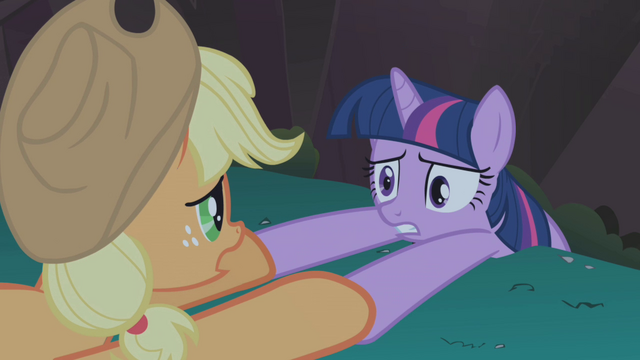
In the Everfree Forest, amongst all the trials the new pony friends face, AJ emerges to show her quality: honesty. Twilight almost falls off a cliff, held only by AJ's hooves. Applejack tells Twilight to let go and promises she'll be safe. Being skeptical by temperament (and no doubt afraid of heights), Twilight asks AJ to honestly tell her if she means what she says. AJ responds that she's telling the "honest truth." Twilight decides to trust AJ and does indeed let go. Before she can hit the ground, Rainbow Dash and Fluttershy, both pegasi, catch Twilight. Therefore, Applejack is true to her word.
Applejack does not appear in the episode "Green isn't Your Color," but her zany friend Pinkie Pie is a suitable substitute. Most of the episode is concerned with the dress designer Rarity’s attempts to gain the notice of Equestria’s famous fashion photographer Photo Finish. Rarity needs a fashion model and the closest candidate is the bashful pegasus Fluttershy. FS is initially reluctant (no surprise) but agrees to help.
While Rarity attempts to find the right dress for Fluttershy in Carousel Boutique, we see Twilight, Pinkie Pie and Spike (Twilight’s baby dragon assistant) mention one of the episode’s themes: keeping promises. Spike agrees to reveal a personal secret to Twilight and Pinkamena but tells them to promise to tell nopony else… He has a crush on Rarity! Twilight doesn’t seem willing at first to keep quiet but Pinky interjects. She tells Twilight that, “You promised Spike you wouldn't say anything. He trusts you. And losing a friend's trust is the fastest way to lose a friend forever!” As if for emphasis, Pinky adds an emphatic, “FOREVER!”
After Photo Finish finishes her shoot, she announces that she intends to make Fluttershy, not Rarity, the new fashion star of Equestria. Rarity is visibly disappointed, but nevertheless tells her friend Fluttershy to promise not waste this opportunity at fame.
![]()
However, alone in her thoughts, Rarity is still a bit jealous over not being picked to be Equestria's next top fashion model. After revealing her wish for Fluttershy to fail, Rarity makes Twilight promise not to tell FS. Fluttershy comes into the spa, missing Rarity's departure, and decides to confide a secret to Twilight, making TS promise not tell Rarity that she does not want to become a fashion star but only proceeds because of her promise to Rarity. Twilight desires to break her promise to Rarity and tell Fluttershy how Rarity really feels but stops after a side-glance from Pinky, the element of honesty in this episode.
Trying to unravel the tangle of promises, Twilight comes up with a plan: sabotage Fluttershy's fashion show, ruining her career and thus making it so that Rarity will no longer be jealous of FS. Of course, Twilight makes Pinky Pie promise not to tell anypony.
Twilight's plan goes well until Rarity arrives and uses her charm to sway the crowd into cheering for Fluttershy. Not only is FS back to square one, she's even more popular than before! Rarity walks in on Fluttershy and Twilight having a conversation in the dressing room. Twilight has to keep herself from breaking either of their promises. Luckily, both Rarity and Fluttershy finally reveal what they think to each other. Rarity is jealous of Fluttershy's success and wanted her to fail and Fluttershy never wanted to be a model in the first place. "If we just told each other the truth," Fluttershy says. Rarity and Fluttershy promise never to keep their feelings secret from each other again.
Twilight eventually reveals Spikie's secret, but everypony already knows he likes Rarity, so nopony minds, though Twilight still apologizes to Spike anyway...
The episode "Party of One" tests Applejack's honesty as the Mane Six plan a surprise birthday party for Pinkie Pie. Of course, a surprise birthday party requires the birthday pony to be unaware of the party or, as Pinkie puts it, "then it wouldn’t be a surprise." Twilight, Rainbow Dash, Rarity, Fluttershy, and Applejack proceed to play a game of deception to keep Pinkamena in the dark while they plan the festivities. Unfortunately, Pinkie Pie plans a party the exact the same day (completely unaware of her own birthday) and is confused at her friends declining to attend and then avoiding her all day. All of the Mane Six offer an "excuse" (and avoid divulging the plan) for not coming to Pinkie's party, including AJ.
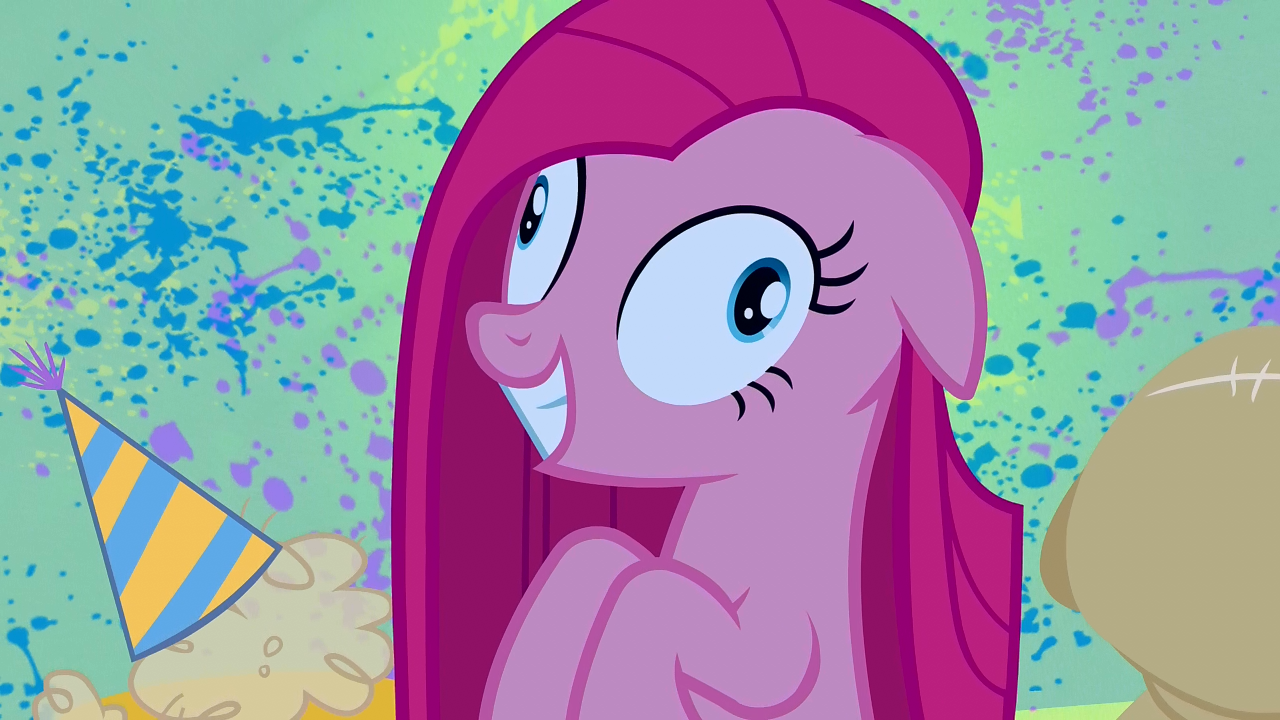
Pinkie Pie finally gets suspicious and follows RD (with birthday present in tow) to AJ's barn, where the Main Six are setting up the surprise party. Of all ponies, AJ, the honest one, finds herself dealing with the Pinky at the door. Pinkamena asks AJ what the Mane Six are up to in the barn and AJ responds that they are doing some "construction" work, complete with fake sound effects. Frustrated by the evasiveness and lying of her friends, Pinky misinterprets the Mane Six's intentions to be no longer including her in their social circle (the end of their friendship) and, already being a little crazy to begin with, she edges ever closer to complete madness.
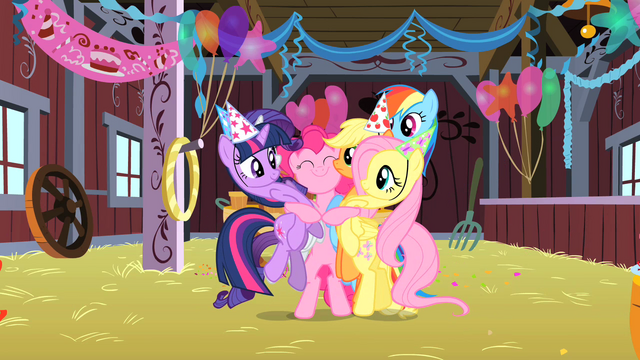
After literally being dragged all the way to AJ's barn by RD, Pinkie Pie accuses her friends of avoiding and lying to her to drive her from the group before finding out that the Mane Six planned to throw her a surprise birthday all along (hence her surprise!). RD also admits that the Mane Six lied but only to keep the surprise. Of course, Pinkie Pie isn’t exactly the moral exemplar of honesty herself… Anyway, Pinkie regains her sanity, the friends reconcile, and the Mane Six get down to serious party business as the episode ends.
[Next post I'll look at two episodes from season two, "Elements of Harmony P2" and "The Last Roundup, before finishing the series on honesty and lying with some help from Aristotle, St. Augustine, and St. Thomas Aquinas.]
Character Overview
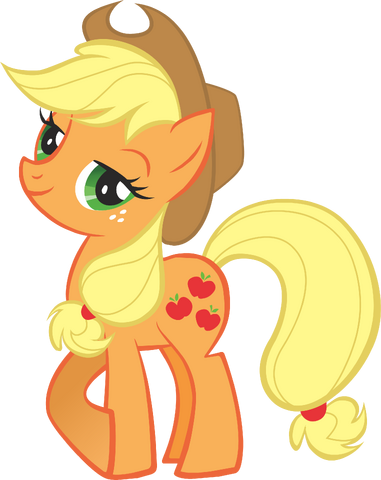 |
| Applejack |
Applejack in My Little Pony: Friendship is Magic is a country pony with a southern accent and like all the members of the Apple family (her brother Big Mac, her little sister Apple Bloom, and Granny Smith) AJ’s special talent is apple harvesting. Unlike her lazy friend Rainbow Dash, AJ is adamant about hard work (sometimes too much, as in her attempt to single-hoovfully buck all the apples in Sweet Apple Acres). AJ’s stubborn pride sometimes gets her into conflict with the other Mane Six (she won’t accept busybody Twilight’s help, she can’t get along with the prissy Rarity, she is extremely competitive with the athletic RD).
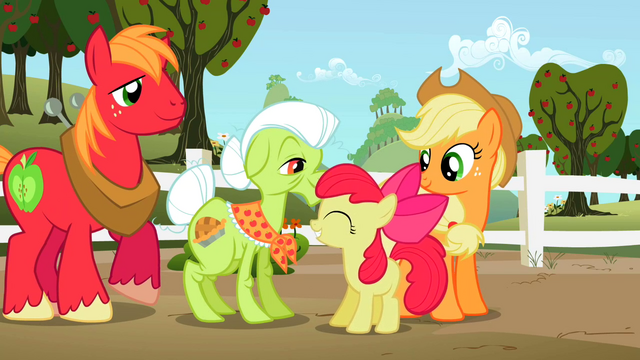 |
| The Apple Family |
Applejack also embodies the Element of Honesty. As the Hasbro.com description tells us, “Applejack would never stoop to tell a lie and this makes her a beacon for those seeking advice.”
 |
| "You've never told a lie? You honest, AJ?" |
Applejack, Don't Lie to Me
We meet Applejack in the first episode of FiM. She invites the newcomer Twilight Sparkle to an Apple family reunion. AJ, of course, teams up with the rest of the Mane Six to look for the ancient pony castle to find the Elements of Harmony to defeat Nightmare Moon (my previous posts on FiM Episode 1 and 2).
In the Everfree Forest, amongst all the trials the new pony friends face, AJ emerges to show her quality: honesty. Twilight almost falls off a cliff, held only by AJ's hooves. Applejack tells Twilight to let go and promises she'll be safe. Being skeptical by temperament (and no doubt afraid of heights), Twilight asks AJ to honestly tell her if she means what she says. AJ responds that she's telling the "honest truth." Twilight decides to trust AJ and does indeed let go. Before she can hit the ground, Rainbow Dash and Fluttershy, both pegasi, catch Twilight. Therefore, Applejack is true to her word.
 |
| Long live the Princess... |
While Rarity attempts to find the right dress for Fluttershy in Carousel Boutique, we see Twilight, Pinkie Pie and Spike (Twilight’s baby dragon assistant) mention one of the episode’s themes: keeping promises. Spike agrees to reveal a personal secret to Twilight and Pinkamena but tells them to promise to tell nopony else… He has a crush on Rarity! Twilight doesn’t seem willing at first to keep quiet but Pinky interjects. She tells Twilight that, “You promised Spike you wouldn't say anything. He trusts you. And losing a friend's trust is the fastest way to lose a friend forever!” As if for emphasis, Pinky adds an emphatic, “FOREVER!”
After Photo Finish finishes her shoot, she announces that she intends to make Fluttershy, not Rarity, the new fashion star of Equestria. Rarity is visibly disappointed, but nevertheless tells her friend Fluttershy to promise not waste this opportunity at fame.
 |
| Forever! |
However, alone in her thoughts, Rarity is still a bit jealous over not being picked to be Equestria's next top fashion model. After revealing her wish for Fluttershy to fail, Rarity makes Twilight promise not to tell FS. Fluttershy comes into the spa, missing Rarity's departure, and decides to confide a secret to Twilight, making TS promise not tell Rarity that she does not want to become a fashion star but only proceeds because of her promise to Rarity. Twilight desires to break her promise to Rarity and tell Fluttershy how Rarity really feels but stops after a side-glance from Pinky, the element of honesty in this episode.
Trying to unravel the tangle of promises, Twilight comes up with a plan: sabotage Fluttershy's fashion show, ruining her career and thus making it so that Rarity will no longer be jealous of FS. Of course, Twilight makes Pinky Pie promise not to tell anypony.
Twilight's plan goes well until Rarity arrives and uses her charm to sway the crowd into cheering for Fluttershy. Not only is FS back to square one, she's even more popular than before! Rarity walks in on Fluttershy and Twilight having a conversation in the dressing room. Twilight has to keep herself from breaking either of their promises. Luckily, both Rarity and Fluttershy finally reveal what they think to each other. Rarity is jealous of Fluttershy's success and wanted her to fail and Fluttershy never wanted to be a model in the first place. "If we just told each other the truth," Fluttershy says. Rarity and Fluttershy promise never to keep their feelings secret from each other again.
 |
| No more secrets between us...Wait, is that 'Lady Gaga' in the background? |
Twilight eventually reveals Spikie's secret, but everypony already knows he likes Rarity, so nopony minds, though Twilight still apologizes to Spike anyway...
The episode "Party of One" tests Applejack's honesty as the Mane Six plan a surprise birthday party for Pinkie Pie. Of course, a surprise birthday party requires the birthday pony to be unaware of the party or, as Pinkie puts it, "then it wouldn’t be a surprise." Twilight, Rainbow Dash, Rarity, Fluttershy, and Applejack proceed to play a game of deception to keep Pinkamena in the dark while they plan the festivities. Unfortunately, Pinkie Pie plans a party the exact the same day (completely unaware of her own birthday) and is confused at her friends declining to attend and then avoiding her all day. All of the Mane Six offer an "excuse" (and avoid divulging the plan) for not coming to Pinkie's party, including AJ.
 |
| Why are all my friends lying to me today? |
Pinkie Pie finally gets suspicious and follows RD (with birthday present in tow) to AJ's barn, where the Main Six are setting up the surprise party. Of all ponies, AJ, the honest one, finds herself dealing with the Pinky at the door. Pinkamena asks AJ what the Mane Six are up to in the barn and AJ responds that they are doing some "construction" work, complete with fake sound effects. Frustrated by the evasiveness and lying of her friends, Pinky misinterprets the Mane Six's intentions to be no longer including her in their social circle (the end of their friendship) and, already being a little crazy to begin with, she edges ever closer to complete madness.
 |
| It's all fun and games until Pinkie loses it... |
 |
| Her blood lust sated, Pinkie has a good time at her surprise birthday party |
[Next post I'll look at two episodes from season two, "Elements of Harmony P2" and "The Last Roundup, before finishing the series on honesty and lying with some help from Aristotle, St. Augustine, and St. Thomas Aquinas.]
Saturday, August 25, 2012
John C. Wright on the Natural Law
 |
| JCW: Ninja-Trained Philosopher |
Be sure to check out this running debate between the science fiction writer (and fellow Brony) John C. Wright and some of his readers on the natural law. I should mention the excellent comment by Matthew Su, a member of the Thomistic Discussion Group on Facebook, who elaborates on the Aristotelian-Thomistic metaphysical grounding of NLT.
Tuesday, August 21, 2012
Edward Feser: Radio Star
 |
| The Fez |
Friday, August 17, 2012
On Love and Tolerance: Part 1

More to follow, but for now some preliminary thoughts on the
popular Brony slogan "Love and Tolerance," inspired by DGD's recent
blogging on certain Brony misunderstandings of sex:
If we understand love in the Aristotelian-Thomistic
tradition (of which, the Christian virtue of charity is the culmination), then
a certain relationship with toleration follows:
1. If to love is to will the good of another.
and
2. If to tolerate is to respect (or put up with) another's
differing ideas or lifestyle.
Therefore
3. If you love someone, you cannot tolerate that which is
contrary to the good of another.
If the argument is sound, the relationship you have with
another person determines the amount of tolerance you can give to another
person's disagreements in ideas and actions.
To be continued...
Sunday, August 5, 2012
Fr. Longenecker on Classical Theism
 |
| "There's only one God, ma'am, and I'm pretty sure he doesn't dress like that." -- Captain America, The Avengers |
The Hebrew God is therefore unique not only because he is the only God of the Hebrews–and pure monotheism is in itself an innovation in the development of religion in the ancient near East–but it is also unique because it is a highly philosophical and metaphysical concept for the divinity. The other pagan god developed from certain earth powers which were personalized or from certain astral or supernatural beings who controlled certain forces of nature. The Hebrew God, on the other hand, is ‘He Who IS” or “He who is existence.”
This is an important distinction to make therefore when discussing the existence of God. Theists often refer to God as ‘the Supreme Being’. This is incorrect from a Judeo-Christian point of view. God is not the Supreme Being–as if he were the biggest person of all, or even the one who was before all and caused all. Any idea therefore that God is some sort of super magical being in the sky is in fact a straw man in the sky because Christians, Jews and Muslims don’t believe in God in that way. Instead he is what St Thomas Aquinas calls the ipsum esse subsistens. (Subsistent Act of Existing Itself) God, according to the scholastics, is not only existence itself, but the ground and source of all existence. That this definition is first revealed to the Hebrews within the divine tetragrammaton elevates Yahweh of the Hebrews into a new and unique dimension of divinity.
Furthermore, it is God’s being ipsum esse subsistens that explains the seeming contradiction of God’s transcendence and immanence. Aquinas argues that God is most transcendent from, and most immanent in creation for the very same reason–that he is that existence that is beyond all existing things and yet the cause in and through all created things–being therefore transcendent and immanent at the same time.
We see here a convergence between the God of the philosophers and the Judeo-Christian God, between natural theology and revealed theology, between Athens and Jerusalem, between "Subsistent Being itself " and "He Who IS." As I said before, the new atheist really needs to do his homework and study what educated theists actually believe before he throws out such straw men like the Flying Spaghetti Monster, Flying China Teacup, Irate Lunar Unicorns, and a cosmic superman (who, incidentally, might also be found in contemporary "theistic personalism").
 |
| Princess Luna, you're really powerful and awesome and all that, but you're still just a creature like the rest of us compared to the One who is really worthy of worship, the real "Love that moves the sun (and moon) and all the stars." |
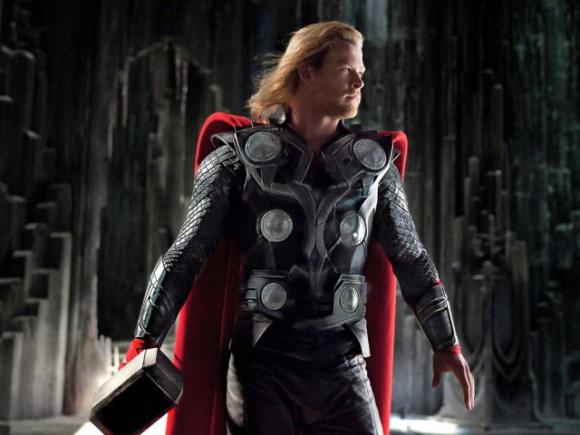
Ed Feser, who's blogged quite a storm answering new atheist caricatures of God, makes further points regarding the significant differences between classical theism and pagan demi-gods like Zeus or Thor (for all you Marvel Comics aficionados!). Consider the interesting observation that the God of Augustine, Anselm and Aquinas could exist along with Zeus and Thor, as the latter two are mere creatures, contingent beings that are mixtures of act and potency, with essences separate from their existence that must be combined by another. The God of classical theism, of course, being pure act, whose essence is existence, would depend on nothing else to exist (aseity), while conversely, everything else other than God would depend on God for existence, including "demi-gods" like Zeus and Thor.
Tuesday, July 24, 2012
Gilson on Aquinas on Accepting Truth Humbly

St. Thomas Aquinas was one of the latter, clear-sighted enough to know truth when he saw it, humble enough to bow to it in its presence. -- Etienne Gilson, The Unity of Philosophical Experience, 49
Other recommended reading on Aquinas:
-G.K. Chesterton, St Thomas Aquinas (free online version)
-Etienne Gilson, The Christian Philosophy of Thomas Aquinas (Brandon: "Still the best introduction to Aquinas you can get your hands on.")
-Brian Davies, The Thought of Thomas Aquinas (Ed Feser: "Probably the best single volume in print for anyone looking for an overview of the whole range of Aquinas’s philosophical and theological thinking.")
-Edward Feser, Aquinas
For peeping Thomists like me who've just discovered the Angelic Doctor, a good place to start is:
Timothy Mcdermott, ed., Summa Theologiae: The Concise Translation
Ralph McInerny, ed, Thomas Aquinas: Selected Writings
For the full Summa, there are a few choices: hardback/paperback, Kindle, and online.
Friday, July 20, 2012
Fluttershy and the Virtue of Friendliness: Part 2
Friendship Report: Aristotle
and Aquinas on Friendliness or Amiability
Well, I did like this episode.
It’s a bit fun to see Fluttershy acting out of character. However, what I find
more interesting is that “Putting Your Hoof Down” is a kind of a moral lesson
on the virtue of friendliness or amiability, as identified by the two prominent
virtue ethicists Aristotle and St. Thomas Aquinas.
 |
| Aristotle, Aquinas, and some guy named Plato |
Before I get to the specific virtue,
allow me some words on virtues in general. The Catechism of the Catholic Church tells us that:
1804 Human virtues are firm attitudes, stable dispositions, habitual
perfections of intellect and will that govern our actions, order our passions,
and guide our conduct according to reason and faith. They make possible ease,
self-mastery, and joy in leading a morally good life. The virtuous man is he
who freely practices the good.
The moral virtues are acquired by human effort. They are the fruit and
seed of morally good acts; they dispose all the powers of the human being for
communion with divine love.
Summarized roughly, the virtues
are dispositions towards doing the good, for morally right actions. A disposition
(or habitus in Latin) is a firmness
or stability in doing something, as opposed to random behavior – “A virtue is a
habitus that is always for good” as Aquinas says (ST 2-1.55.4). Therefore, somepony
who exemplifies the virtue of honesty, like Applejack, is disposed towards
telling the truth, instead of just sporadic truthfulness some of the time. (We
can get into the further issue of the consistency of AJ’s honesty in the series
but that’s another post for another day, not to mention it'll lead us back to that whole debate on the Catholic blogosphere a year ago on the definition of lying and whether lying is always wrong, which I think is the case.)
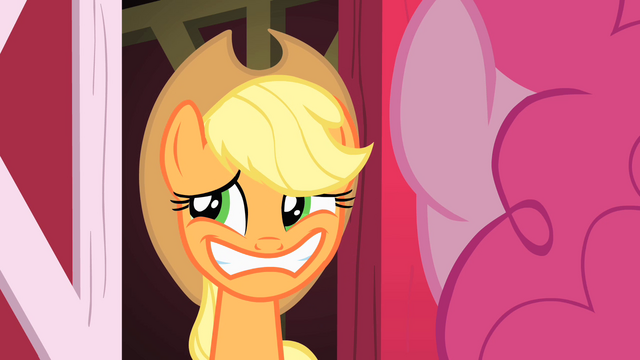 |
| AJ, be honest, have you told any lies lately? |
As virtues dispose us towards the
good, their opposites, vices, dispose us towards the bad. More specifically,
while virtues perfect our powers of the soul (the rational soul in us humans),
as Aquinas notes (ST 2-1.55.4), vices work against the perfection of our
powers.
Cultivating virtues is then just
like learning to ride a bike, you practice and practice until the action
becomes easy to do, or second nature.
Two further points, though. First,
it is important that the Latin term habitus
used by Aquinas translates as “disposition” rather than “habit,” as a
disposition, while firm once acquired, is still voluntary, that is, we freely
chose to exercise the action. Second, both Aristotle and Aquinas see the good
as the fulfilling of the end of something (my buddy DGD mentions “final causality”
in connection to MLP-related matters here). In the case of humans, rational
animals in Aristotle’s definition, the good for us is the perfection or fulfilling
of our rational nature; the virtues help us in the journey towards this end, which is happiness, be it intellectual contemplation in the case of Aristotle or the beatific vision for Aquinas.
Virtue theory usually divides the
virtues into the intellectual, moral, and theological, the first two
(potentially) acquirable by human effort and the third only attainable by God’s
grace (though for the Catholic all virtues require God’s help in some sense).
However, for the purposes of this post, we focus only on the moral virtues (or “cardinal
virtues”). The cardinal virtues divide into prudence, justice, fortitude, and
temperance. Prudence guides the other virtues and is a kind of moral common
sense that allows us to discern the right goods to purse along with the right
means. Justice is concerned with giving what is due (to both other men and God).
Fortitude is firmness in pursuit of the good. Temperance is a balance in
sensual pleasures, like food, drink and sex.
Since the virtue of justice
concerns giving what is due to our neighbor, and since humans are social
animals as Aristotle points out, it is of great importance what sort of
relationship we have with others in society (and with God). We owe a debt of honor of truthfulness in our words (honesty) and actions (friendliness), without which society could not survive (ST, 2-2.114.2). As Julie Davis of Happy Catholic blog reminds us, it all
boils down to following the commandant of Christ to love, to “Do to others
whatever you would have them do to you” (Matthew 7:12). The just man, then,
lives in harmony with his fellow man, which brings us back to friendliness, a
satellite virtue of justice…
Fluttershy the Element of Amiability
Among the moral virtues
considered by Aristotle is one to which he gives no name that deals with our
relations with other people, but can be called by us friendliness or amiability.
First, Aristotle considers two extremes or vices related to friendliness - obsequiousness
and disagreeableness:
Some men seem to be obsequious in association with others and in
interchange of words and deeds. They praise everything for the sake of
pleasantness, and never contradict anyone, being of the opinion that
unpleasantness ought to be avoided.
Others, on the contrary, always find fault, taking care to emphasize
anything unpleasant. They are called perverse and quarrelsome. (NE, IV, 816-817)
In other words, obsequiousness is
being a “doormat” or “pushover” with others, being overly eager to please and
not cause offense, especially in matters in which disagreement is necessary. While
with her general agreeable disposition Fluttershy is always in danger of this
vice, in “Putting your Hoof Down” she definitely slides over in obsequiousness.
At the start of the episode, when her dealings with other ponies call for her
to point out an injustice, she instead backs down, not wanting to displease
anypony.
 |
| Fluttershy the Doormat |
On the other hoof, the opposite
vice of disagreeability doesn’t give a flying feather what others think, be it causing
offense, criticizing, and arguing at every opportunity. Therefore, the new
Fluttershy, fresh off her assertiveness training, is nasty towards the other
residents of Ponyville, even her own friends, harshly criticizing any mistakes,
flaws, or quirks that cross her path, regardless of what pain it may cause or of
the necessity.
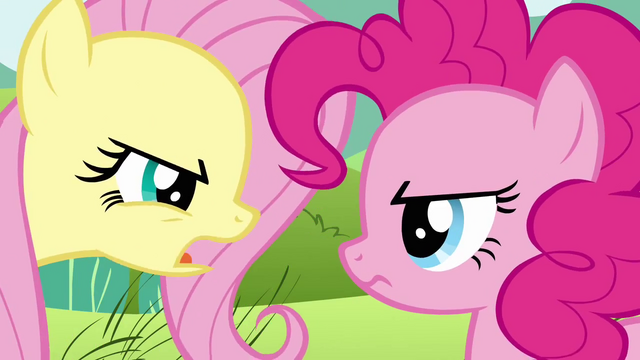 |
| Nastyshy |
Aristotle next tells us the mean
between the two extremes:
These habits being reprehensible, obviously the mean habit is
laudable—that habit according to which a person approves what he should and
also disapproves what he should. (NE, IV, 818)
Amiability or friendliness boils
down to being agreeable with others when necessary and disagreeable when necessary.
Aristotle further elaborates that the amiable man “aims to cause no offense and
to give pleasure” but “will refuse to give pleasure and will choose to cause
pain over what is dishonorable and harmful to himself or to the person doing an
injury or a great wrong” (NE, IV, 825). In other words, the friendly or amiable will usually
be pleasant around others and seek their good unless an injustice or an evil
performed by others calls him out to cause pain in the form of criticism or correction.
By the end of the episode, Fluttershy
returns to this mean (the old Fluttershy), no longer being a pushover who is
okay with everything or a “Flutterbitch” who fights everypony over every little
thing. As Rarity points out, “You can stand up for yourself without being
unpleasant about it,” which is the Element of Generosity’s way of saying that we
should be agreeable to others. But what is being agreeable to others other than
friendship or a sign of friendship? For friends seek and will the good of one another, and, thus,
sometimes it is necessary for a friend to cause another friend pain in the form
of disagreement or criticism if that friend should falter in the pursuit of the
good, but this is done out of amor amicitiae, the love that is friendship.
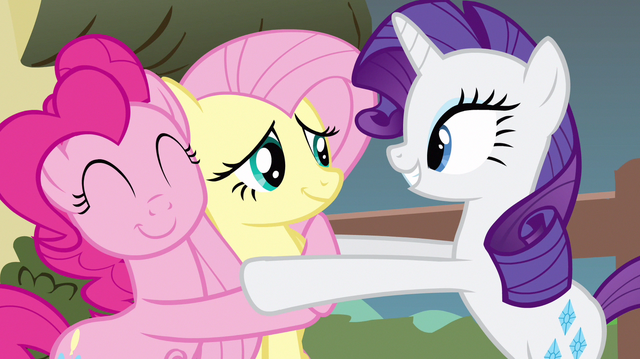 |
| Old, amiable Fluttershy returns |
Or as Fluttershy tells us in her “Friendship
Report” letter to Celestia:
Sometimes it can be hard for a shy pony like me to stand up for myself,
and when I first tried it, I didn't like the pony I became. But I've learned
that standing up for yourself isn't the same as changing who you are. Now I
know how to put my hoof down without being unpleasant, or mean.
Other sources worth noting:
Brian Davies, The Thought of Thomas Aquinas
Peter Kreeft, Back to Virtue
Friday, July 6, 2012
Classical Theism: No Laughing Matter

What's a good way to know that you're dealing with the God of classical theism (the God of Aquinas) as opposed to another conception, such as the personalist God of neo-theism, which dominates philosophy of religion circles today? Well, you could tackle hugely important and complicated theological/philosophical issues like the classical view of divine simplicity. My friend Alfredo has plenty to say on DDS here. The Christian film critic and fantasy writer Jeffrey Overstreet, however, suggests another approach:
When Terry Gilliam's Monty Python cartoons portray a big-bearded, grouchy God in the clouds, we laugh because we have seen such insufficient representations of God before. We're laughing at our own feeble illustrations of someone too mysterious and powerful to be illustrated. In short, we're laughing at ourselves.
But try to make a joke at the expense of God Himself and we'll be hard-pressed to come up with anything funny. It just doesn't work. That's because there's nothing wrong with God. There's nothing out of place. Those who try to make fun of God end up exposing their own limited views of Him. They're usually driven by pride, cruelty, anger, and outrage, which ultimately turn the jokes back against the jokers, revealing them to be arrogant and misguided. Likewise, any attempt to degrade Christ through humor reveal the lack of proper reverence and respect in the joker.
-- Through a Screen Darkly, 235
Sunday, June 10, 2012
Coming Attractions
With another semester of college out of the way, I'm planning to start and finish a few writing and blogging projects this summer. Some of these
posts deal with philosophical and theological topics, others with MLP. There
are even projects that combine MLP with philosophical and theological subjects!
Here's what's coming soon (I hope)...
- My thematic review of some of the MLP: FiM episodes
- My MLP virtue/vice spotlight series
- A series of posts on classical theism (the God of Aquinas
vs. New Atheist caricatures of God)
- A MLP fan fiction story currently titled "Citizen Luna,"
which combines MLP, Citizen Kane, and Star Wars into what might be an entertaining
and cautionary tale of a misguided quest for love. I'll post a link once I finish chapter one.
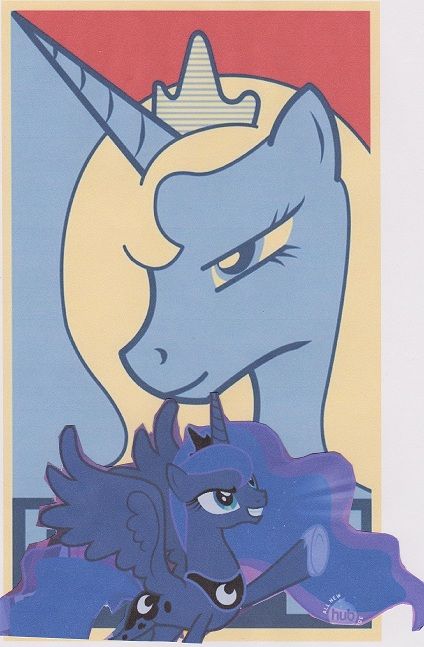 |
| CITIZEN LUNA Concept Art |
I should also mention, for all you fellow Catholic Bronies out
there, that I've just started watching G1 MLP, which isn't as bad as I imagined
(though still not as good or as cool as FiM). After catching the first MLP TV
Special, "Return to Midnight Castle," I'm beginning to fear I might
turn into a fan of G1 MLP. DGD, my journey towards the dark side is nearly
complete...
Yeah, I know the writing and pacing need work, but check out
Twilight Sparkle's mom and G1 Applejack!
Update: No, wait, the dark side is becoming a G3 Brony,
which has to be a violation of the law of contradiction or something.
Tuesday, June 5, 2012
Alfredo vs Alvin Plantinga
My friend and fellow Thomist Alfredo Watkins, the "Analytic Scholastic," asks a question
about presuppositionalism to the prominent philosopher Alvin Plantinga at the
"Christian Scholarship" conference at Biola University, in May (HT: Walking Christian):
If you look closely to the right of Alfredo, you might spot the humble blogger of the RPG Catholic site.
Here are the brief musings I posted on Facebook:
Just got back from Biola from the first day of a conference on Christian Scholarship. Alfredo, Gil, and Dave were shrewd enough to score us seats behind Alvin Plantinga and Nicholas Wolterstorff. Peter Van Inwagen may even have made a brief cameo appearance. I didn't have “The Analytic Theist” on hand for Al to sign, but I did get a picture and a chance to comment on his striking resemblance to Abe Lincoln.
Update: More thoughts on the conference from Gil Sanders.
Monday, June 4, 2012
All Work and No Play Makes Jack a Dull Boy: Aquinas on Games
Brandon picked a good time to bring attention to Aquinas's thoughts on games or playfulness in the Summa, as I've read and thought over the same passages in the past few weeks (albeit in the concise translation of the ST). As my blog's namesake implies, I do enjoy the occasional role-playing video game (e.g. The Elder Scrolls V: Skyrim) and I do have a bit of a jocular streak, as witnessed by my frequent pony-related references. The worry I've had on my mind is whether my video gaming or Bronyness distracts from more important and grave concerns, such as theological and philosophical studies, in addition to a life of Catholic devotion. In short, what role do entertainments such as video games and MLP play in the journey to the beautific vision, the knowledge of God that is the final end of man? Can a Catholic have fun?
| Here's Johnny! |
The Angelic Doctor seeks a balance between work (the virtue of studiousness) and good play (the virtue of eutrapelia). According to Aquinas, much study is tiring to the soul in the same manner as much labor is wearying to the body. Therefore, Aquinas suggests relaxation (playing games or telling jokes) from study, from intellectual contemplation, similar to bodily rest from physical labor. In Brandon's words, "We play because, despite being rational creatures, real thinking is hard work; thus the more we do it, the more we need to relax our minds, lest we wind ourselves up so tightly we break." Exactly, we need to unwind sometimes from the hard work of thinking less we break... or risk going completely insane like the writer Jack Torrance from The Shining, who's "all work and no play" (okay, perhaps this isn't the best example). In short, we need to have some fun!
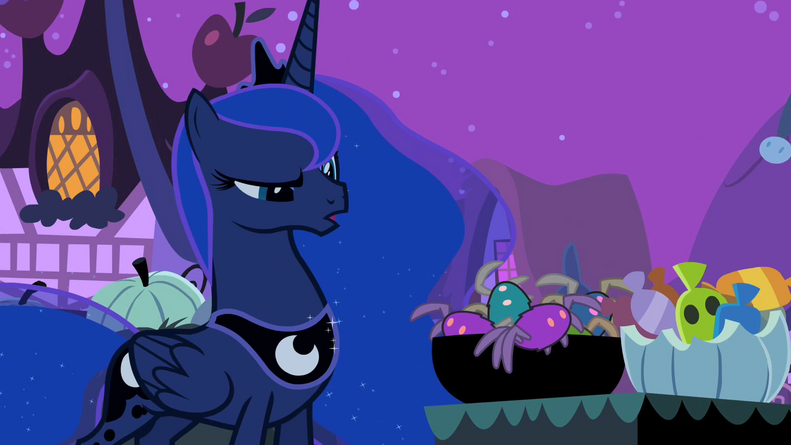 |
"Fun? What is this "fun" thou speakest of?
Pray tell, what purpose do these serve?"
|
So in my own life, the video games I play and the MLP-inspired comedy I enjoy can serve the purpose of allowing me to rest from my mental labors (and believe me, thinking about Thomism is hard work), in the same way sleep allows my body to rest. I can have some fun as long as I don't forget my final end, which is God.
Or as Applejack (for non-Bronies, the one with the scarecrow costume) tells Princess Luna in the MLP: FiM episode Luna Eclipsed, sometimes you have to:
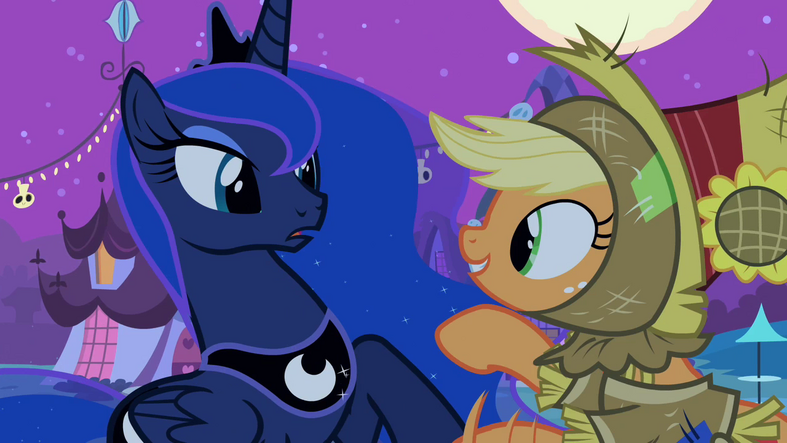 |
"...Loosen up a bit, be positive, play a few games,
have some fun."
|
Thus, you can sometimes relax, play games and have fun, sometimes even double
the fun!
Subscribe to:
Posts (Atom)