Showing posts with label Books. Show all posts

Saturday, April 20, 2013

Coming Attractions


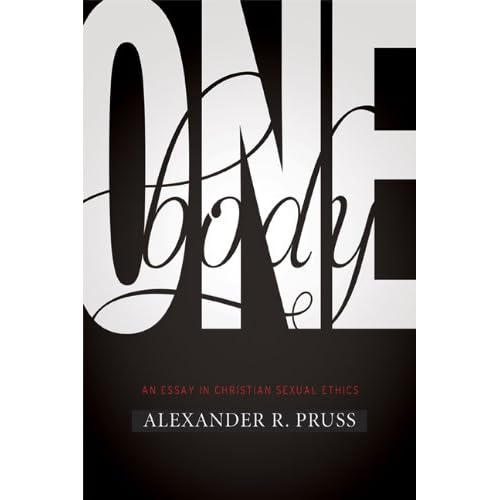
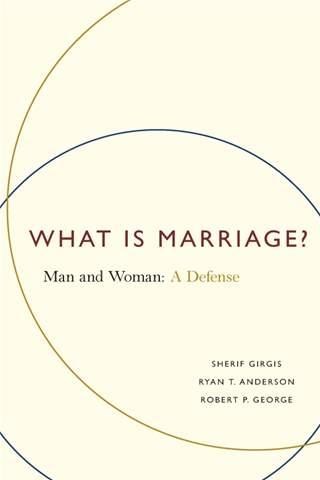
I'm thinking of picking up my blogging, since I haven't been active in a while on account of being distracted by my pop culture-related video making. Perhaps I can kill two birds with one stone and blog about my reading of Alex Pruss's One Body and the What is Marriage? book by George/Anderson/Girgis. It'll also give me an excuse to reread the chapter on sexual morality in the Catechism.

A few other books I'd really like to get are Karol Wojtyla's Love and Responsibility and J. Budziszewski's On the Meaning of Sex.

Hopefully I can stick to a blogging schedule.

Monday, February 4, 2013

Goodreads 100 Books Meme

I noticed Mrs. Darwin and Brandon both recently posted a Goodreads 100 Books Meme, so I thought I'd join in on the fun, even though I'm definitely not as well read. If nothing else, the meme should give me some ideas for a reading list.


Books I've read
Books I started but didn't find interesting enough to continue
Could be interested to read
If I were handed this, I'd look for the nearest cereal box as an alternative
Book I haven't read
* Book I own and haven't read

To Kill a Mockingbird

The Catcher in the Rye
Fellowship of the Ring
Pride and Prejudice*
Harry Potter and the Philsopher's Stone
Romeo and Juliet
Jane Eyre
1984
Hamlet*
The Hobbit
Brave New World
The Lion, The Witch, and the Wardrobe
The Great Gatsby
The Adventures of Huckleberry Finn
Fahrenheit 451
Wuthering Heights
Alice in Wonderland*
The Secret Garden
Green Eggs and Ham
Little Women
Of Mice and Men
The Handmaid's Tale
Lord of the Flies
The DaVinci Code
Frankenstein*
Dune
The Hitchhiker's Guide to the Galaxy
Gone With The Wind
Charlie and the Chocolate Factory
A Wrinkle in Time
The Girl with the Dragon Tattoo
Slaughterhouse Five
Anne of Green Gables
Twilight
Where the Sidewalk Ends
The Little Prince
Memoirs of a Geisha
The Princess Bride
The Picture of Dorian Grey
The Hunger Games
Sense and Sensibility
The Golden Compass
Dracula
The Color Purple
The Kite Runner
The Odyssey*
Anna Karenina
And Then There Were None
Interview with the Vampire
The Book Thief
One Hundred Years of Solitude
The Count of Monte Cristo
One Flew Over the Cuckoo's Nest
The Joy Luck Club
Little House on the Prairie
The Giver
Life of Pi
Rebecca
The Adventures of Sherlock Holmes
Ender's Game
A Tale of Two Cities
The Stranger
East of Eden
Les Miserables
The Bell Jar
Lolita
The Road
The Time Traveler's Wife
A Prayer for Owen Meany
The Stand
Catch-22
The Sun Also Rises
The Pillars of the Earth
Crime and Punishment
The Good Earth
The Unbearable Lightness of Being
The Help
Watchmen
Lonesome Dove
Water for Elephants
Outlander
American Gods
The Poisonwood Bible
My Sister's Keeper
The Master and Margarita
The Notebook
Like Water for Chocolate
Beloved
Their Eyes Were Watching God
Invisible Man
A Game of Thrones
The Fountainhead
The Brief Wondrous Life of Oscar Wao
Ulysses
The Wind-Up Bird Chronicle
The Brothers Karamazov
The House of the Spirits
Fight Club
Middlesex
Interpreter of Maladies

Wednesday, January 9, 2013

Mike Flynn and John C.Wright Interview

It's not every day when the well-known Catholic writers Michael Flynn and John C. Wright get together to talk Catholicism and Science Fiction. The interviewer and medievalist Sandra Miesel also includes an article on the subject of Catholic Science Fiction. Be sure to give both a read!  (HT: Mark Shea).

I should also mention the Catholic Writer's Guild, which includes many sci-fi writers.

Saturday, December 22, 2012

A Few Good Books on the "Pelvic Issues"

There are two recently released books defending traditional Christian sexual morality (that the sexual act aims at 1) a "one-flesh" union and 2) procreation, the begetting and rearing of children) that might be of interest to my philosophically inclined readers.


The first is One Body: An Essay in Christian Sexual Ethics by the philosopher Alexander Pruss. Pruss takes a phenomenological approach (emphasizing the unitive aspects of the sexual act) similar to Pope John Paul II's Theology of the Body, with some "new" natural law theory thrown in for good measure. You can find a short summary of Pruss's argument here.


The second is What is Marriage? Man and Woman: A Defense by Robert P. George, Ryan T. Anderson, and Sherif Girgis. The three defend the traditional view of marriage as between a man and a woman. This book couldn't be more timely, as there is a growing trend in public opinion to redefine marriage to include same-sex partnerships, as one can see from the election battles in Minnesota and three other states just last month. Check out an earlier journal article version here.


Sunday, October 28, 2012

Another Kind of Strong Female Character...


While reading Rebecca Bratten Weiss and Regina Doman's "Catholic Philosopher Chick Makes her Debut," I can't fail to notice that Catelyn constantly walks around Dominican University with her old, beaten single volume (!) copy of the Summa Theologiae. Unless this is some kind of fantasy story, I suspect she has an abridged version, since a modern-day complete Summa comprises 5 large volumes and 3000 pages!

Anyhow, I highly recommend the book (especially the $5 Kindle version), since you don't exactly get many chances to read the exciting exploits of female Thomist philosophers (or She-Thomists). Here's a review by First Things. I might post more as I make it further in, so stay tuned...

Wednesday, October 24, 2012

Tolkien on the Presence of God in the Lord of the Rings


You... create a world in which some sort of faith seems to be everywhere without a visible source, like light from an invisible lamp. -- J.R.R. Tolkien quoting an "unbelieving" reader in letter no. 328, The Letters of J.R.R. Tolkien, Ed. Humphrey Carpenter. (HT: The Flame Imperishable)

Friday, October 19, 2012

Mind and Cosmos


Taking a short break from pony-related matters, I briefly note, for my more philosophically-inclined readers, that Thomas Nagel, prominent atheist philosopher and critic of mind-body materialism (physicalism), recently came out with a new book where he purports to forge a middle road between a materialistic reduction/elimination of the mind and theism. Ed Feser, Bill Vallicella, and James Chastek all give their thoughts.

Friday, October 12, 2012

The Year of Faith


Since the Annus Fidei or Year of Faith just kicked off, I thought I'd share a few helpful links for some of my Catholic readers.

As the USCCB notice tells us (HT: Cari Donaldson and David Ives):

With his Apostolic Letter of October 11, 2011,Porta Fidei. . . , Pope Benedict XVI declared that a "Year of Faith" will begin on October 11, 2012 and conclude on November 24, 2013. October 11, 2012, the first day of the Year of Faith, is the fiftieth anniversary of the opening of the Second Vatican Council. . . (Vatican II) and also the twentieth anniversary of the Catechism of the Catholic Church. During the Year of Faith, Catholics are asked to study and reflect on the documents of Vatican II and the catechism so that they may deepen their knowledge of the faith.

The upcoming Year of Faith is a “summons to an authentic and renewed conversion to the Lord, the One Savior of the world” (Porta Fidei 6). In other words, the Year of Faith is an opportunity for Catholics to experience a conversion – to turn back to Jesus and enter into a deeper relationship with him. The “door of faith” is opened at one’s baptism, but during this year Catholics are called to open it again, walk through it and rediscover and renew their relationship with Christ and his Church.


- Jeffrey Miller of "The Curt Jester" collected all 16 documents from Vatican II into epub and Kindle format.

- Matthew Warner of Fallible Blogma started the "Read the Catechism in a Year" project. Everyday you'll receive an email with a small snippet of the Catechism to read. You can also follow along online or with the various book versions (here, here, and here).

- Don't forget the daily mass readings! Regarding Bibles, I recommend the Revised Standard Version: Catholic Edition. Ignatius Press also makes an excellent New Testament Study Bible.


Wednesday, September 12, 2012

Good Question


If you were brought to trial on the charge of being a Christian, would there be enough evidence to convict you? -- Peter Kreeft, You Can Understand the Bible, 216

Saturday, August 25, 2012

Twilight Sparkle: Element of Friendship, Egghead, Philosopher

Twilight's Library
Just a few books from the Golden Oaks Library:

- Plato, The Complete Works, John M. Cooper, ed.

- Aristotle, The Basic Works of Aristotle, Richard McKeon, ed.

- Henry Veatch, Aristotle: A Contemporary Appreciation

- Boethius, Consolation of Philosophy, Joel C. Relihan, ed.

- St. Augustine, Confessions, Henry Chadwick, ed.

- -----------, City of God, Henry Bettenson, ed.

- St. Anselm, The Major Works, Brian Davies, ed.

- St. Thomas Aquinas, Summa Theologiae: A Concise Translation, Timothy McDermott, ed.

- Ed Feser, Aquinas

Twilight no doubt studying for her next friendship report...

Sunday, August 19, 2012

A Link to the Past: Steam Punk, Anime, and Sci Fi

Just a few interesting web comics, sci fi books, and anime shows catching my attention recently...

First up, I point you to the Girl Genius web comic. Brandon's recommended this steam punk graphic novel a few times and DGD even wrote a gushing review. I've only read through the first volume, but so far I'm intrigued enough to make it through all twelve!


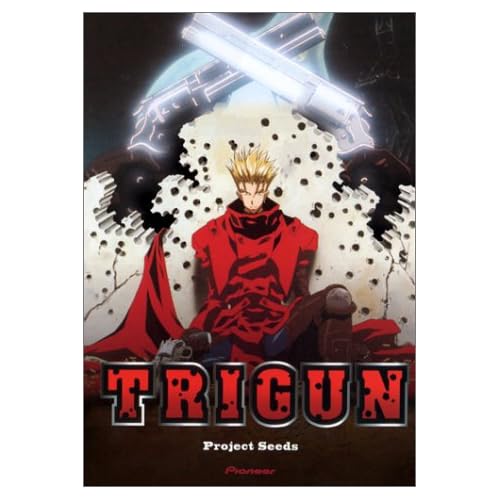
Next up, DGD suggested to me the show Trigun, a western-themed anime about the pacifist gunslinger Vash the Stampede, the "Human Typhoon" with a 60,000,000,000$$ (you read that right, double dollars!) bounty on his head! The first season is available here on the FuNimation Youtube page.


All I want is love and peace!

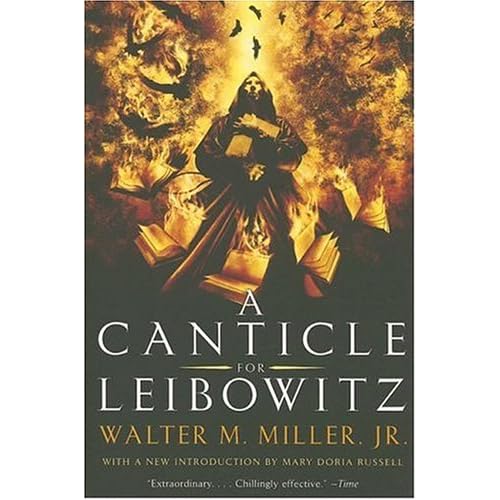
Lastly, I'm nearly finished with Walter M. Miller Jr.'s post-apocalyptic Sci Fi novel A Canticle for Leibowitz about an order of monks who preserve scientific knowledge after the "Great Deluge." Brandon praised it as "one of the most exquisitely written science fiction novels you will ever read." I'm not inclined to disagree, very highly recommended, especially for my fellow Thomist readers!


Tuesday, July 24, 2012

Gilson on Aquinas on Accepting Truth Humbly


While so many men were trying to base philosophy on theological foundations, a very simple and modest man was putting everything in its place. His name was Thomas Aquinas, and he was saying things so obviously true that, from his time down to our own day, very few people have been sufficiently self-forgetful to accept them. There is an ethical problem at the root of our philosophical difficulties; for men are most anxious to find truth, but very reluctant to accept it. We do not like to be cornered by rational evidence, and even when truth is there, in its impersonal and commanding objectivity, our greatest difficulty still remains; it is for me to bow to it in spite of the fact that it is not exclusively mine, for you to accept it though it cannot be exclusively yours. In short, finding out truth is not so hard; what is hard is not to run away from truth once we have found it. When it is not a "yes but," our "yes" is often enough a "yes, and..."; it applies much less to what we have just been told than to we are about to say. The greatest among philosophers are those who do not flinch in the presence of truth, but welcome it with the simple words: yes, Amen.

St. Thomas Aquinas was one of the latter, clear-sighted enough to know truth when he saw it, humble enough to bow to it in its presence. -- Etienne Gilson, The Unity of Philosophical Experience, 49

Other recommended reading on Aquinas:

-G.K. Chesterton, St Thomas Aquinas (free online version)

-Etienne Gilson, The Christian Philosophy of Thomas Aquinas (Brandon: "Still the best introduction to Aquinas you can get your hands on.")

-Brian Davies, The Thought of Thomas Aquinas (Ed Feser: "Probably the best single volume in print for anyone looking for an overview of the whole range of Aquinas’s philosophical and theological thinking.")

-Edward Feser, Aquinas

For peeping Thomists like me who've just discovered the Angelic Doctor, a good place to start is:

Timothy Mcdermott, ed., Summa Theologiae: The Concise Translation

Ralph McInerny, ed, Thomas Aquinas: Selected Writings

For the full Summa, there are a few choices: hardback/paperback, Kindle, and online.

Friday, July 6, 2012

Classical Theism: No Laughing Matter


What's a good way to know that you're dealing with the God of classical theism (the God of Aquinas) as opposed to another conception, such as the personalist God of neo-theism, which dominates philosophy of religion circles today?  Well, you could tackle hugely important and complicated theological/philosophical issues like the classical view of divine simplicity. My friend Alfredo has plenty to say on DDS here. The Christian film critic and fantasy writer Jeffrey Overstreet, however, suggests another approach:

When Terry Gilliam's Monty Python cartoons portray a big-bearded, grouchy God in the clouds, we laugh because we have seen such insufficient representations of God before. We're laughing at our own feeble illustrations of someone too mysterious and powerful to be illustrated. In short, we're laughing at ourselves.


But try to make a joke at the expense of God Himself and we'll be hard-pressed to come up with anything funny. It just doesn't work. That's because there's nothing wrong with God. There's nothing out of place. Those who try to make fun of God end up exposing their own limited views of Him. They're usually driven by pride, cruelty, anger, and outrage, which ultimately turn the jokes back against the jokers, revealing them to be arrogant and misguided. Likewise, any attempt to degrade Christ through humor reveal the lack of proper reverence and respect in the joker.         
 -- Through a Screen Darkly, 235


Thursday, June 7, 2012

Tolkien on the Theological Virtue of Hope


Sam saw a white star twinkle for a while. The beauty of it smote his heart, as he looked up out of the forsaken land, and hope returned to him. For like a shaft, clear and cold, the thought pierced him that in the end the Shadow was only a small and passing thing: there was light and high beauty for ever beyond its reach -- J.R.R. Tolkien, The Return of the King

Tuesday, June 5, 2012

Summer Reading List Meme


The Darwin Catholic posted a list of six recommended books for summer reading, hoping to start a summer reading list meme. Here's mine..

Watershed Reads:


1. The Lord of the Rings or The Silmarillion, by J.R.R Tolkien (or better yet, both!).  I think Brandon would second me on this one, but in addition to The Lord of the Rings as one the watershed reads, I would add The Silmarillion, which covers the epic history of Middle Earth, from creation to the lead up to The Hobbit. How epic? Well, the entire events of the LoTR only occupy a single paragraph out of the 300 or so pages. I especially enjoyed the “Ainulindalë” and “Children of Hurin” chapters. And if you thought the Battle of Pelannor Fields a massive battle, wait until you read about the War of Wrath in the First Age. We may never see a cinematic version.


2. The Brothers Karamazov, by Fyodor Dostoyevsky. I read this the summer before my senior year of high school. Two aspects stand out to me from the Karamazov tale, first, the harrowing results of living a nihilistic philosophy (as Ivan says, “Without God all is permitted”). The other is the Grand Inquisitor chapter. I guess I can also recommended Crime and Punishment, which features a similar plot where a nihilistic character attempts to go “beyond good and evil” by committing murder.

3. The Divine Comedy, by Dante. If I had to decide which of the three books had the most pivotal impact on my life, I’d pick the Inferno. After reading Dante’s tale of the journey through Hell, I immediately began to puzzle over the justice and love of God, which led me to reassess my so-far simplistic thinking of God. Thus, I began studying philosophy and theology, discovering Thomas Aquinas. Also, I should mention Ed Feser once said the Divine Comedy is a kind of sci-fi for Thomists!

Waterside Reads:

1. Jane Eyre, by Charlotte Bronte. I just finished reading Bronte’s tale of “Plain Jane” this past spring, finding it an enjoyable yarn of one spirited woman’s quest to overcome the constraints of Victorian society ("I am not an automaton!"). There’s also a love story (with the eccentric Mr. Rochester, who dresses like a gypsy at one point) and some gothic, horror imagery (red room) thrown in for good measure. You won’t mind at all that this is a “girl’s book.”

2. Harry Potter and the Deathly Hallows, by J.K. Rowling. By far my favorite of the seven HP books, Deathly Hallows concludes with the final battle between Harry Potter and Voldemort. I should mention the Christian themes that run through this book, especially regarding the right way to face death (the “death eaters” vs. the “order the phoenix”).

3. Brave New World, by Aldous Huxley. The dystopian future developed in this book, the soma, the artificial reproduction, and so forth, looks less fantastical and more prescient given our current post-sexual revolution era.