Dr. Peter Kreeft, Dr. Edward Feser, Fr. Robert Barron, Fr. Robert Spitzer, Dr. Benjamin Wiker, Dr. Christopher Kaczor, Dr. Janet Smith, Dr. Kevin Vost, Christopher West, Jimmy Akin, Jennifer Fulwiler, Marc Barnes, Leah Libresco, Stacy Trascanos, Mark Shea, Tim Staples and Carl Olson.Be sure to check it out!

L'amor che muove il sole e l'altre stelle -- Dante
Showing posts with label Feser. Show all posts
Showing posts with label Feser. Show all posts
Wednesday, May 8, 2013
Strange Notions
Brandon Vogt recently launched a website, Strange Notions, with the goal of encouraging dialogue between Catholics and atheists. There's several articles on a variety of topics, like God, philosophy, morality, science, and Jesus. Brandon managed to assemble an impressive team of contributors, most well known in the Catholic blogosphere:

Monday, March 18, 2013
A Link to the Past

Just a few links from around the web:
- Aristotelian and Thomist-inclined readers might be interested to hear that 3:AM Magazine recently interviewed John Haldane and E.J. Lowe.
- The Lawrence Krauss "nothingness" show continues as philosopher David Albert, writer of a critical New York Times review of the book A Universe from Nothing, lost his invitation to an upcoming debate on "The Existence of Nothing" involving Krauss and other physicists. (HT: Bill Vallicella)
Krauss's blatant equivocation in his use of the word "nothing" needs little reiteration, but for those curious, the philosophers Bill Vallicella and Ed Feser both do an excellent job. For similar bad philosophizing on "nothing" by Stephen Hawking, see the responses by philosopher William Lane Craig and physicist Stephen M. Barr.
Saturday, November 3, 2012
At the ACPA Conference
I was able to make it to the first day of the American Catholic Philosophical Association annual meeting in Marina Del Rey, CA. Alfredo and his friend Alex Yousif were there and I tagged along with them the rest of the day.
We started the proceedings by listening to Kevin Timpe on "Responsible Agency and God" and Daniel Speak on "Open Theism." Dr. Timpe asked me to wear a unicorn shirt to the lecture and so I whipped out my MLP Vynil Scratch "DJ-Pon 3" tee.

After the first session, we went to the next lecture by Dr. Chris Tollefsen on "Double Effect Reasoning and Two Hard Cases." Gyula Klima was scheduled to present a paper, but couldn't make it from New York due to flooding from Hurricane Sandy. I was a bit disappointed at not seeing Klima, but to my surprise, Edward Feser (whose books and blog posts I've recommend countless times) walked into the room. After the talk ended, I was able to meet Dr. Feser and discuss a few Thomistic matters I've been thinking about lately.
Next up, I joined Alfredo, Alex, Dr. Tollefsen and other professors for dinner at a local French restaurant. We finished the night by going to a reception in the topmost penthouse room of the Marriot Hotel, where I met Germain Grisez and Christopher Kaczor.
Overall, I'd say it was a fun day.
 |
| Alfredo the "Analytic Scholastic," Eric the "RPG Catholic," and Alex |
We started the proceedings by listening to Kevin Timpe on "Responsible Agency and God" and Daniel Speak on "Open Theism." Dr. Timpe asked me to wear a unicorn shirt to the lecture and so I whipped out my MLP Vynil Scratch "DJ-Pon 3" tee.

After the first session, we went to the next lecture by Dr. Chris Tollefsen on "Double Effect Reasoning and Two Hard Cases." Gyula Klima was scheduled to present a paper, but couldn't make it from New York due to flooding from Hurricane Sandy. I was a bit disappointed at not seeing Klima, but to my surprise, Edward Feser (whose books and blog posts I've recommend countless times) walked into the room. After the talk ended, I was able to meet Dr. Feser and discuss a few Thomistic matters I've been thinking about lately.
 |
| Big fanboy grin... |
 |
| Alfredo, Ed Feser, and Alex |
Next up, I joined Alfredo, Alex, Dr. Tollefsen and other professors for dinner at a local French restaurant. We finished the night by going to a reception in the topmost penthouse room of the Marriot Hotel, where I met Germain Grisez and Christopher Kaczor.
Overall, I'd say it was a fun day.
Friday, October 19, 2012
Mind and Cosmos

Taking a short break from pony-related matters, I briefly note, for my more philosophically-inclined readers, that Thomas Nagel, prominent atheist philosopher and critic of mind-body materialism (physicalism), recently came out with a new book where he purports to forge a middle road between a materialistic reduction/elimination of the mind and theism. Ed Feser, Bill Vallicella, and James Chastek all give their thoughts.
Tuesday, September 18, 2012
Aquinas: Music Video Super Star!
Are you just a beginning, peeping Thomist? Bought Ed Feser's book but haven't yet found the time to sit down and read it? Well, never fear, the singing trio of Bambi, Vicki, and Angelica will teach you the basics of St. Thomas Aquinas's thought (HT: Angelicum Newsletter):
Saturday, August 25, 2012
Twilight Sparkle: Element of Friendship, Egghead, Philosopher
 |
| Twilight's Library |
- Plato, The Complete Works, John M. Cooper, ed.
- Aristotle, The Basic Works of Aristotle, Richard McKeon, ed.
- Henry Veatch, Aristotle: A Contemporary Appreciation
- Boethius, Consolation of Philosophy, Joel C. Relihan, ed.
- St. Augustine, Confessions, Henry Chadwick, ed.
- -----------, City of God, Henry Bettenson, ed.
- St. Anselm, The Major Works, Brian Davies, ed.
- St. Thomas Aquinas, Summa Theologiae: A Concise Translation, Timothy McDermott, ed.
- Ed Feser, Aquinas
 |
| Twilight no doubt studying for her next friendship report... |
Tuesday, August 21, 2012
Edward Feser: Radio Star
 |
| The Fez |
Sunday, August 5, 2012
Fr. Longenecker on Classical Theism
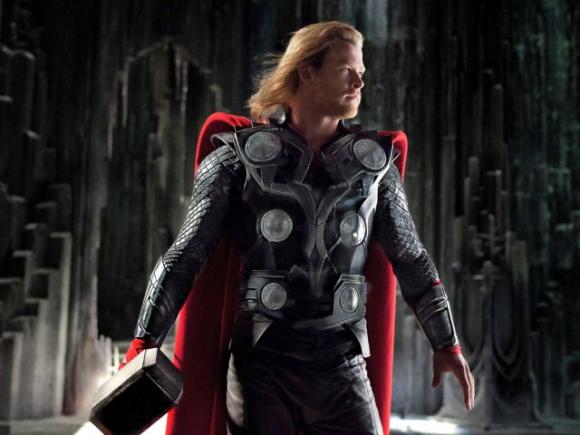 |
| "There's only one God, ma'am, and I'm pretty sure he doesn't dress like that." -- Captain America, The Avengers |
The Hebrew God is therefore unique not only because he is the only God of the Hebrews–and pure monotheism is in itself an innovation in the development of religion in the ancient near East–but it is also unique because it is a highly philosophical and metaphysical concept for the divinity. The other pagan god developed from certain earth powers which were personalized or from certain astral or supernatural beings who controlled certain forces of nature. The Hebrew God, on the other hand, is ‘He Who IS” or “He who is existence.”
This is an important distinction to make therefore when discussing the existence of God. Theists often refer to God as ‘the Supreme Being’. This is incorrect from a Judeo-Christian point of view. God is not the Supreme Being–as if he were the biggest person of all, or even the one who was before all and caused all. Any idea therefore that God is some sort of super magical being in the sky is in fact a straw man in the sky because Christians, Jews and Muslims don’t believe in God in that way. Instead he is what St Thomas Aquinas calls the ipsum esse subsistens. (Subsistent Act of Existing Itself) God, according to the scholastics, is not only existence itself, but the ground and source of all existence. That this definition is first revealed to the Hebrews within the divine tetragrammaton elevates Yahweh of the Hebrews into a new and unique dimension of divinity.
Furthermore, it is God’s being ipsum esse subsistens that explains the seeming contradiction of God’s transcendence and immanence. Aquinas argues that God is most transcendent from, and most immanent in creation for the very same reason–that he is that existence that is beyond all existing things and yet the cause in and through all created things–being therefore transcendent and immanent at the same time.
We see here a convergence between the God of the philosophers and the Judeo-Christian God, between natural theology and revealed theology, between Athens and Jerusalem, between "Subsistent Being itself " and "He Who IS." As I said before, the new atheist really needs to do his homework and study what educated theists actually believe before he throws out such straw men like the Flying Spaghetti Monster, Flying China Teacup, Irate Lunar Unicorns, and a cosmic superman (who, incidentally, might also be found in contemporary "theistic personalism").
 |
| Princess Luna, you're really powerful and awesome and all that, but you're still just a creature like the rest of us compared to the One who is really worthy of worship, the real "Love that moves the sun (and moon) and all the stars." |
Ed Feser, who's blogged quite a storm answering new atheist caricatures of God, makes further points regarding the significant differences between classical theism and pagan demi-gods like Zeus or Thor (for all you Marvel Comics aficionados!). Consider the interesting observation that the God of Augustine, Anselm and Aquinas could exist along with Zeus and Thor, as the latter two are mere creatures, contingent beings that are mixtures of act and potency, with essences separate from their existence that must be combined by another. The God of classical theism, of course, being pure act, whose essence is existence, would depend on nothing else to exist (aseity), while conversely, everything else other than God would depend on God for existence, including "demi-gods" like Zeus and Thor.
Friday, July 20, 2012
Fluttershy and the Virtue of Friendliness: Part 2
Friendship Report: Aristotle
and Aquinas on Friendliness or Amiability
Well, I did like this episode.
It’s a bit fun to see Fluttershy acting out of character. However, what I find
more interesting is that “Putting Your Hoof Down” is a kind of a moral lesson
on the virtue of friendliness or amiability, as identified by the two prominent
virtue ethicists Aristotle and St. Thomas Aquinas.
 |
| Aristotle, Aquinas, and some guy named Plato |
Before I get to the specific virtue,
allow me some words on virtues in general. The Catechism of the Catholic Church tells us that:
1804 Human virtues are firm attitudes, stable dispositions, habitual
perfections of intellect and will that govern our actions, order our passions,
and guide our conduct according to reason and faith. They make possible ease,
self-mastery, and joy in leading a morally good life. The virtuous man is he
who freely practices the good.
The moral virtues are acquired by human effort. They are the fruit and
seed of morally good acts; they dispose all the powers of the human being for
communion with divine love.
Summarized roughly, the virtues
are dispositions towards doing the good, for morally right actions. A disposition
(or habitus in Latin) is a firmness
or stability in doing something, as opposed to random behavior – “A virtue is a
habitus that is always for good” as Aquinas says (ST 2-1.55.4). Therefore, somepony
who exemplifies the virtue of honesty, like Applejack, is disposed towards
telling the truth, instead of just sporadic truthfulness some of the time. (We
can get into the further issue of the consistency of AJ’s honesty in the series
but that’s another post for another day, not to mention it'll lead us back to that whole debate on the Catholic blogosphere a year ago on the definition of lying and whether lying is always wrong, which I think is the case.)
 |
| AJ, be honest, have you told any lies lately? |
As virtues dispose us towards the
good, their opposites, vices, dispose us towards the bad. More specifically,
while virtues perfect our powers of the soul (the rational soul in us humans),
as Aquinas notes (ST 2-1.55.4), vices work against the perfection of our
powers.
Cultivating virtues is then just
like learning to ride a bike, you practice and practice until the action
becomes easy to do, or second nature.
Two further points, though. First,
it is important that the Latin term habitus
used by Aquinas translates as “disposition” rather than “habit,” as a
disposition, while firm once acquired, is still voluntary, that is, we freely
chose to exercise the action. Second, both Aristotle and Aquinas see the good
as the fulfilling of the end of something (my buddy DGD mentions “final causality”
in connection to MLP-related matters here). In the case of humans, rational
animals in Aristotle’s definition, the good for us is the perfection or fulfilling
of our rational nature; the virtues help us in the journey towards this end, which is happiness, be it intellectual contemplation in the case of Aristotle or the beatific vision for Aquinas.
Virtue theory usually divides the
virtues into the intellectual, moral, and theological, the first two
(potentially) acquirable by human effort and the third only attainable by God’s
grace (though for the Catholic all virtues require God’s help in some sense).
However, for the purposes of this post, we focus only on the moral virtues (or “cardinal
virtues”). The cardinal virtues divide into prudence, justice, fortitude, and
temperance. Prudence guides the other virtues and is a kind of moral common
sense that allows us to discern the right goods to purse along with the right
means. Justice is concerned with giving what is due (to both other men and God).
Fortitude is firmness in pursuit of the good. Temperance is a balance in
sensual pleasures, like food, drink and sex.
Since the virtue of justice
concerns giving what is due to our neighbor, and since humans are social
animals as Aristotle points out, it is of great importance what sort of
relationship we have with others in society (and with God). We owe a debt of honor of truthfulness in our words (honesty) and actions (friendliness), without which society could not survive (ST, 2-2.114.2). As Julie Davis of Happy Catholic blog reminds us, it all
boils down to following the commandant of Christ to love, to “Do to others
whatever you would have them do to you” (Matthew 7:12). The just man, then,
lives in harmony with his fellow man, which brings us back to friendliness, a
satellite virtue of justice…
Fluttershy the Element of Amiability
Among the moral virtues
considered by Aristotle is one to which he gives no name that deals with our
relations with other people, but can be called by us friendliness or amiability.
First, Aristotle considers two extremes or vices related to friendliness - obsequiousness
and disagreeableness:
Some men seem to be obsequious in association with others and in
interchange of words and deeds. They praise everything for the sake of
pleasantness, and never contradict anyone, being of the opinion that
unpleasantness ought to be avoided.
Others, on the contrary, always find fault, taking care to emphasize
anything unpleasant. They are called perverse and quarrelsome. (NE, IV, 816-817)
In other words, obsequiousness is
being a “doormat” or “pushover” with others, being overly eager to please and
not cause offense, especially in matters in which disagreement is necessary. While
with her general agreeable disposition Fluttershy is always in danger of this
vice, in “Putting your Hoof Down” she definitely slides over in obsequiousness.
At the start of the episode, when her dealings with other ponies call for her
to point out an injustice, she instead backs down, not wanting to displease
anypony.
 |
| Fluttershy the Doormat |
On the other hoof, the opposite
vice of disagreeability doesn’t give a flying feather what others think, be it causing
offense, criticizing, and arguing at every opportunity. Therefore, the new
Fluttershy, fresh off her assertiveness training, is nasty towards the other
residents of Ponyville, even her own friends, harshly criticizing any mistakes,
flaws, or quirks that cross her path, regardless of what pain it may cause or of
the necessity.
 |
| Nastyshy |
Aristotle next tells us the mean
between the two extremes:
These habits being reprehensible, obviously the mean habit is
laudable—that habit according to which a person approves what he should and
also disapproves what he should. (NE, IV, 818)
Amiability or friendliness boils
down to being agreeable with others when necessary and disagreeable when necessary.
Aristotle further elaborates that the amiable man “aims to cause no offense and
to give pleasure” but “will refuse to give pleasure and will choose to cause
pain over what is dishonorable and harmful to himself or to the person doing an
injury or a great wrong” (NE, IV, 825). In other words, the friendly or amiable will usually
be pleasant around others and seek their good unless an injustice or an evil
performed by others calls him out to cause pain in the form of criticism or correction.
By the end of the episode, Fluttershy
returns to this mean (the old Fluttershy), no longer being a pushover who is
okay with everything or a “Flutterbitch” who fights everypony over every little
thing. As Rarity points out, “You can stand up for yourself without being
unpleasant about it,” which is the Element of Generosity’s way of saying that we
should be agreeable to others. But what is being agreeable to others other than
friendship or a sign of friendship? For friends seek and will the good of one another, and, thus,
sometimes it is necessary for a friend to cause another friend pain in the form
of disagreement or criticism if that friend should falter in the pursuit of the
good, but this is done out of amor amicitiae, the love that is friendship.
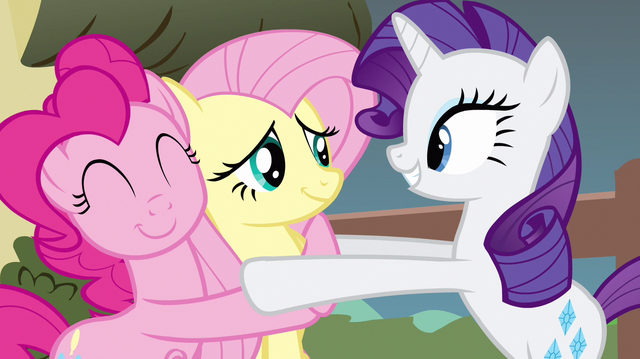 |
| Old, amiable Fluttershy returns |
Or as Fluttershy tells us in her “Friendship
Report” letter to Celestia:
Sometimes it can be hard for a shy pony like me to stand up for myself,
and when I first tried it, I didn't like the pony I became. But I've learned
that standing up for yourself isn't the same as changing who you are. Now I
know how to put my hoof down without being unpleasant, or mean.
Other sources worth noting:
Brian Davies, The Thought of Thomas Aquinas
Peter Kreeft, Back to Virtue
Friday, June 1, 2012
A Link to the Past
A few notable posts from around the Catholic blogosphere, mostly dealing with friendship and the "pelvic issues" that blind sight our culture, according to Dr. Peter Kreeft...
| MLP: The Magic of Friendship not Lesbianism |
- DGD, sci-fi writer and fellow Brony, responds to the
prevalence of slash (lesbian) MLP fan fiction and deals with one of the many distortions of modern thought on sex, that is, the conflation of close same-sex
friendships with homosexual relationships. The Sci-fi Catholic also briefly
defends an Aristotelian-Thomistic view of sexuality, arguing, among other things, that the
end of the sexual act is procreation, which sounds like common sense. But as
G.K. Chesterton might say, the prevalent modern thinking on sex is more like
common nonsense. (Check out DGD's MLP fan fic Princess Trinity, which
boasts an opening right out of Dante's Inferno, complete with a sign above the gates of Tartarus, and finally addresses the glaring lack
of way cool mechs in the magic-dominated pony world of Equestria.)
| Frodo and Sam: A literary example of male friendship |
- While DGD considers Brony misunderstandings of female friendship in MLP, Dr. Phillip
Blosser sees a similar corrosive effect of modern sexual thought on male
friendship.
- Edward Feser, who offers a brief overview of Thomistic
sexual morality in his highly recommended The Last Superstition (132-152), summarizes the major differences between
classical/scholastic philosophy and modern philosophy, especially the modern
rejection of teleology or final causes in favor of mechanistic philosophy, and
clears up a few confusions. (For more on Aristotelian-Thomism, let me once
again shamelessly plug Feser's Aquinas.)
- Since we're still on the subject of sex, I'd like to
mention this gem from Aquinas unearthed by Brandon.
Wednesday, May 16, 2012
On Nothing
In the latest First Things issue, A-T philosopher Edward
Feser reviews physicist Lawrence Krauss' latest book, A Universe from Nothing.
Krauss, of course, is one of the world's leading experts, along with Dawkins,
Hawking, and Atkins, in the burgeoning field of nothing, which mainly studies
new ways to equivocate between "something" and “nothing" in trying to answer the classical question ("why is there something rather than nothing?") by arguing that the universe came into existence out of nothing.

As Feser tells us, "nothing" for philosophers
means the absence of anything - simple enough. For Krauss, however:
The bulk of the book is devoted to exploring how the energy
present in otherwise empty space, together with the laws of physics, might have
given rise to the universe as it exists today. This is at first treated as if
it were highly relevant to the question of how the universe might have come
from nothing—until Krauss acknowledges toward the end of the book that energy,
space, and the laws of physics don’t really count as “nothing” after all. Then
it is proposed that the laws of physics alone might do the trick—though these
too, as he implicitly allows, don’t really count as “nothing” either.
In other words, Krauss seems to pulling a bait and switch,
what he really means by "nothing" is really "something,"
such as energy in empty space or the laws of physics. Feser's final thoughts
are more than fitting:
Exciting or not, Krauss’ voyage does not take his reader
where he thought he was going. To the centuries-old debate over why any
universe exists at all, Krauss’ book contributes—precisely nothing.
As for me, considering the continuous stream of nothing and of amateurish philosophy and theology from Krauss and co., I can't think of any other response (HT: Sci Fi Catholic):

Wednesday, May 2, 2012
Small Errors and Big Consequences

"A small error in the beginning grows enormous at the end."
--Thomas Aquinas, On Being and Essence
"Abandoning Aristotelianism, as the founders of modern philosophy did, was the single greatest mistake ever made in the entire history of Western thought."
-- Edward Feser, The Last Superstition
What is this modern error? What exactly was lost? As James Chastek tells us:
"A thomist could probably teach the whole history of modern thought as an overlooking of the distinction between potency and act."
Meanwhile, I need to work on making my next potential post
on MLP and friendship actual.
Wednesday, April 25, 2012
The Universe Came into Existence Out of Nothing? Now that's Something!

Edward Feser gives his latest response to the silly view of some atheist physicists that the universe came into existence out of "nothing" due to the laws of physics. I'd add something, but as only a beginning Thomist, I've got nothing on Dr. Feser:
Meanwhile, Julie Andrews already provided a response to Victor Stenger, Stephen Hawking, and Lawrence Krauss way back in 1965, through the power of music:
Nothing comes from nothing, nothing ever could
Translation: Ex Nihilo Nihil Fit
Tuesday, April 10, 2012
The Sci-Fi Thomist
Dante's Divine Comedy is hard SF for Thomists, according to A-T philosopher Edward Feser.
Subscribe to:
Posts (Atom)