 |
| The Fez |

L'amor che muove il sole e l'altre stelle -- Dante
Showing posts with label Classical Theism. Show all posts
Showing posts with label Classical Theism. Show all posts
Tuesday, August 21, 2012
Edward Feser: Radio Star

Sunday, August 5, 2012
Fr. Longenecker on Classical Theism
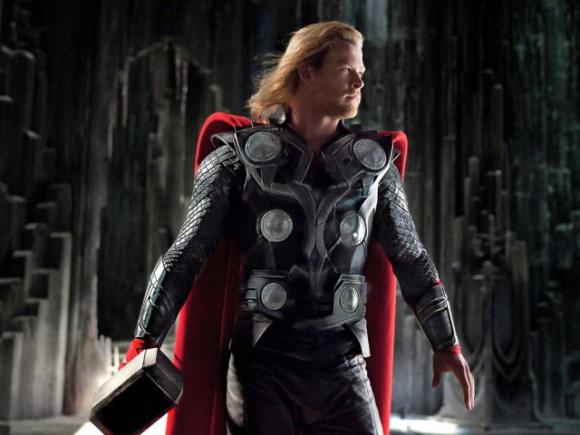 |
| "There's only one God, ma'am, and I'm pretty sure he doesn't dress like that." -- Captain America, The Avengers |
The Hebrew God is therefore unique not only because he is the only God of the Hebrews–and pure monotheism is in itself an innovation in the development of religion in the ancient near East–but it is also unique because it is a highly philosophical and metaphysical concept for the divinity. The other pagan god developed from certain earth powers which were personalized or from certain astral or supernatural beings who controlled certain forces of nature. The Hebrew God, on the other hand, is ‘He Who IS” or “He who is existence.”
This is an important distinction to make therefore when discussing the existence of God. Theists often refer to God as ‘the Supreme Being’. This is incorrect from a Judeo-Christian point of view. God is not the Supreme Being–as if he were the biggest person of all, or even the one who was before all and caused all. Any idea therefore that God is some sort of super magical being in the sky is in fact a straw man in the sky because Christians, Jews and Muslims don’t believe in God in that way. Instead he is what St Thomas Aquinas calls the ipsum esse subsistens. (Subsistent Act of Existing Itself) God, according to the scholastics, is not only existence itself, but the ground and source of all existence. That this definition is first revealed to the Hebrews within the divine tetragrammaton elevates Yahweh of the Hebrews into a new and unique dimension of divinity.
Furthermore, it is God’s being ipsum esse subsistens that explains the seeming contradiction of God’s transcendence and immanence. Aquinas argues that God is most transcendent from, and most immanent in creation for the very same reason–that he is that existence that is beyond all existing things and yet the cause in and through all created things–being therefore transcendent and immanent at the same time.
We see here a convergence between the God of the philosophers and the Judeo-Christian God, between natural theology and revealed theology, between Athens and Jerusalem, between "Subsistent Being itself " and "He Who IS." As I said before, the new atheist really needs to do his homework and study what educated theists actually believe before he throws out such straw men like the Flying Spaghetti Monster, Flying China Teacup, Irate Lunar Unicorns, and a cosmic superman (who, incidentally, might also be found in contemporary "theistic personalism").
 |
| Princess Luna, you're really powerful and awesome and all that, but you're still just a creature like the rest of us compared to the One who is really worthy of worship, the real "Love that moves the sun (and moon) and all the stars." |
Ed Feser, who's blogged quite a storm answering new atheist caricatures of God, makes further points regarding the significant differences between classical theism and pagan demi-gods like Zeus or Thor (for all you Marvel Comics aficionados!). Consider the interesting observation that the God of Augustine, Anselm and Aquinas could exist along with Zeus and Thor, as the latter two are mere creatures, contingent beings that are mixtures of act and potency, with essences separate from their existence that must be combined by another. The God of classical theism, of course, being pure act, whose essence is existence, would depend on nothing else to exist (aseity), while conversely, everything else other than God would depend on God for existence, including "demi-gods" like Zeus and Thor.
Friday, July 6, 2012
Classical Theism: No Laughing Matter

What's a good way to know that you're dealing with the God of classical theism (the God of Aquinas) as opposed to another conception, such as the personalist God of neo-theism, which dominates philosophy of religion circles today? Well, you could tackle hugely important and complicated theological/philosophical issues like the classical view of divine simplicity. My friend Alfredo has plenty to say on DDS here. The Christian film critic and fantasy writer Jeffrey Overstreet, however, suggests another approach:
When Terry Gilliam's Monty Python cartoons portray a big-bearded, grouchy God in the clouds, we laugh because we have seen such insufficient representations of God before. We're laughing at our own feeble illustrations of someone too mysterious and powerful to be illustrated. In short, we're laughing at ourselves.
But try to make a joke at the expense of God Himself and we'll be hard-pressed to come up with anything funny. It just doesn't work. That's because there's nothing wrong with God. There's nothing out of place. Those who try to make fun of God end up exposing their own limited views of Him. They're usually driven by pride, cruelty, anger, and outrage, which ultimately turn the jokes back against the jokers, revealing them to be arrogant and misguided. Likewise, any attempt to degrade Christ through humor reveal the lack of proper reverence and respect in the joker.
-- Through a Screen Darkly, 235
Friday, May 11, 2012
God and the Angry Lunicorn
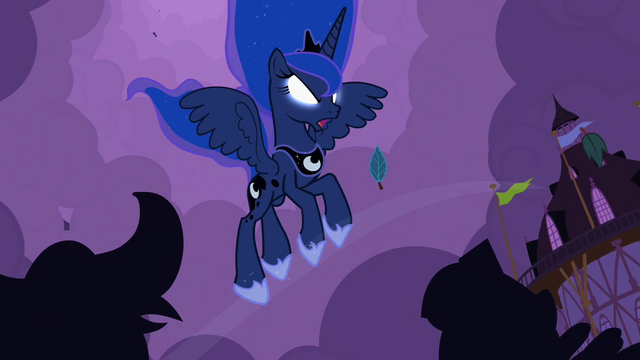 |
| Princess Luna: irate lunar unicorn |
Bill Vallicella considers the contrast between the New Atheist concept of God and the classical theism of Thomas Aquinas. The gulf is indeed large:
If someone asserts that there there is a celestial teapot
orbiting the sun, or an angry unicorn on the far side of the moon, or that 9/11
was an 'inside job,' one will justifiably demand evidence. "It's possible, but what's your evidence
for so outlandish a claim?" It is
the same with God, say many atheists. The antecedent probability of God's existence, they think, is on a par with
the extremely low antecedent probability of there being an irate lunar unicorn,
a 'lunicorn,' if you will.
But this is to assume something that a sophisticated theist
such as Thomas Aquinas would never grant, namely, that God, if he exists, is
just another being among the totality of beings. For Aquinas, God is not an ens (a being)
but esse ipsum subsistens (self-subsistent Being). God is not a being, but Being itself. Admittedly, this is not an easy notion; but
if the atheist is not willing to grapple
with it, then his animadversions are just so many grapplings with a straw man.
Why can't God be just another being among beings?
If God exists, then God is the metaphysical ground of the
very existence of every contingent being, and indeed, of every being distinct
from himself. This is not true of lunar unicorns and celestial teapots. If
there is a lunar unicorn, then this is just one more isolated fact about the
universe. But if God exists, then everything is unified by this fact:
everything has the ground of its being and its intelligibility in the creative
activity of this one paradigmatic purely spiritual being.
A typical New Atheist like Richard Dawkins
attacks a straw man (or straw God), exposing his lightweight theological and
philosophical credentials (no surprise Edward Feser deals more with the
"small errors" of modern philosophy in TLS than with Dawkins,
Hitchens, Harris, Dennett, etc.) In short, the God that Catholics believe
in is not like a celestial teacup (pace Bertrand Russell), not like an angry lunicorn (pace Ed Abbey), and not like a flying spaghetti
monster (pace Bobby Henderson).
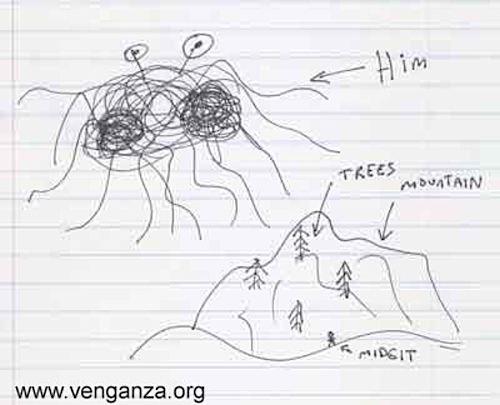 |
| New Atheists need to stop doodling and start doing their homework |
On a side note, I wonder why Ed Abbay's unicorn on the dark side of the
moon is angry. However, I do know that in the cartoon My Little Pony: Friendship is Magic the
unicorn Princess Luna spends a thousand years on the moon for attempted
insurrection against her sister Celestia. Upon breaking out, Luna is definitely irate. I don't blame her. It
must be cold and boring living alone on a rock for a millennium.
 |
| Thy Princess is not amused! |
Subscribe to:
Posts (Atom)